Road construction is often evaluated through measurable equipment specifications: crusher capacity, screening efficiency, feed size, motor power, and aggregate output. These figures matter, but they do not tell the whole story. A road project does not consume aggregate according to the maximum theoretical capacity of a crusher. It consumes material according to the pace of excavation, subgrade preparation, base-course placement, paving, drainage work, and other construction activities. If aggregate production greatly exceeds the construction schedule, material can accumulate unnecessarily. If production falls behind, expensive equipment and labor may remain idle while downstream crews wait. The most productive aggregate operation is therefore not necessarily the one with the highest hourly capacity. It is the one whose output rhythm is synchronized with the construction program. Stone crusher machine selection, stockpile planning, equipment utilization, and production scheduling should work backward from the actual aggregate demand of the road project.
Why Crusher Capacity Alone Cannot Define Road Aggregate Productivity
Maximum Output Does Not Equal Useful Output
A crusher rated at a certain capacity can theoretically produce a substantial quantity of aggregate per hour under appropriate operating conditions. Yet road construction rarely consumes material at that exact rate continuously. Aggregate demand fluctuates. Earthworks may progress slowly during one stage, while base-course placement accelerates during another. Weather, equipment availability, site access, surveying, drainage installation, and compaction can all alter the pace of downstream construction. If the crushing plant continues producing at maximum capacity regardless of these variations, the operation may create large stockpiles without generating proportional project progress. Production must therefore be measured against useful consumption, not simply machine throughput.
Downstream Operations Set the Real Pace
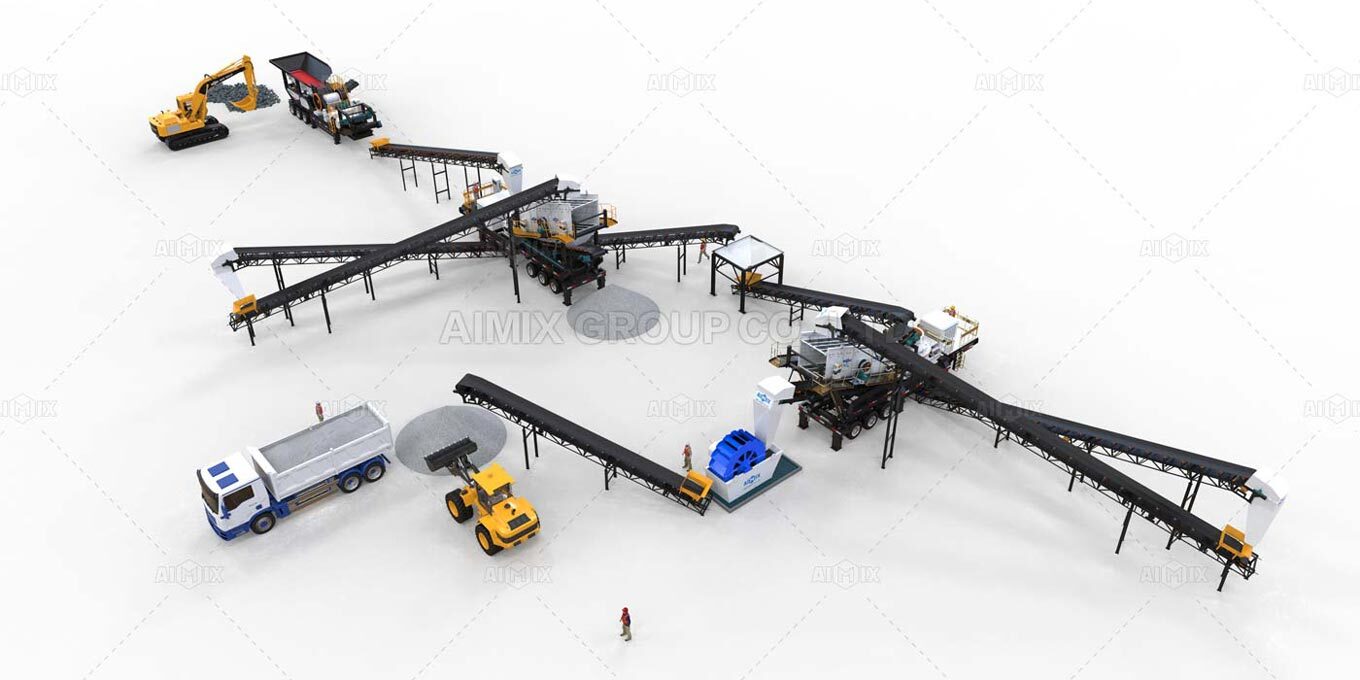
Road aggregate normally passes through several stages after crushing. Depending on the project, material may be screened, graded, stockpiled, transported, spread, compacted, or incorporated into asphalt or concrete. The slowest critical stage can effectively become the production bottleneck. For example, a crushing plant capable of producing hundreds of tons per hour cannot accelerate a road section if grading and compaction crews are only prepared to consume a fraction of that material. Increasing crusher output in such circumstances simply moves the bottleneck downstream.
How Construction Schedules Determine the Right Aggregate Production Rhythm
Aggregate Demand Should Be Mapped Against Project Milestones
A road project should establish when and where different aggregate grades will be required. Subbase material may be needed during one phase, base-course aggregate during another, while different specifications may later be required for asphalt production. This creates a demand curve rather than a single production target. A useful road aggregate production plan should therefore connect crushing output with construction milestones. Instead of asking, “How many tons can the crusher produce per hour?” project managers should also ask, “How many tons are required this week, and when must they be available?” That shift changes the entire production philosophy.
Stockpiles Should Absorb Normal Variations, Not Hide Poor Scheduling
Stockpiles are essential for road projects because production and consumption rarely occur at precisely the same rate. A controlled buffer can protect paving and earthworks from short-term interruptions in crushing. However, oversized stockpiles can create their own complications. They occupy land, require additional material handling, increase dust exposure, and may lead to repeated loading and transportation.
Build a Strategic Buffer
The ideal stockpile is neither minimal nor excessive. It should provide enough material to protect the construction schedule from ordinary production interruptions while remaining consistent with site capacity and material turnover. This makes stockpile management part of production engineering rather than simply a storage decision.
Seasonal and Site Conditions Can Change Aggregate Demand
Road construction does not always proceed at a uniform pace. Rainfall can affect earthworks and hauling conditions. Access roads may deteriorate. Certain sections may become temporarily inaccessible, while other sections advance faster than expected. A flexible crushing operation can respond to these fluctuations by adjusting production hours, feed rates, or stockpile targets. The objective is resilience. The aggregate plant should be capable of adapting to the construction schedule instead of forcing the project to adapt to the plant.
How to Synchronize Crushing Operations With Road Project Demand
Select Equipment for Required Production, Not Maximum Advertised Capacity
Crusher selection should begin with the project's actual aggregate requirements. The target output should account for material type, feed characteristics, desired product sizes, operating hours, expected utilization, and the required reserve capacity. A plant with excessive nominal capacity may involve higher investment, energy consumption, and maintenance requirements without delivering corresponding project value. Conversely, insufficient capacity can create a persistent supply deficit. The practical target lies between these extremes.
Coordinate Crushing With Screening and Material Handling
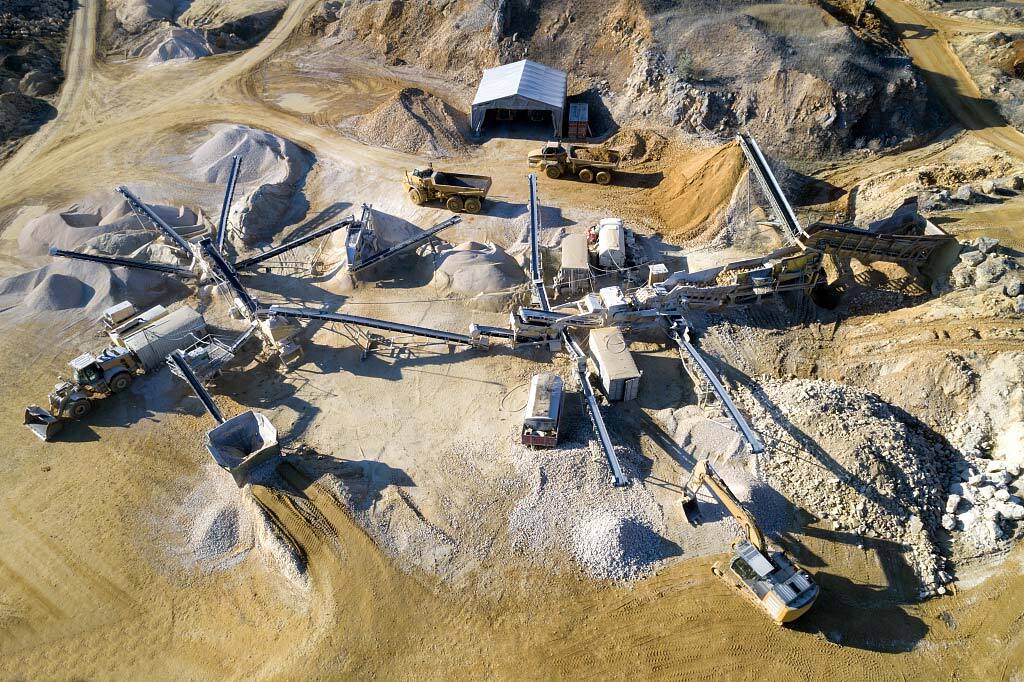
Crusher capacity is only meaningful when the rest of the plant can support it. Screens, conveyors, feeders, stockpiles, loaders, and haulage equipment must form a coherent production chain. If the screening system cannot process the crusher's output, the aggregate crusher must be throttled back. If conveyors cannot move the required material, production becomes constrained. If loaders cannot reclaim aggregate quickly enough, downstream construction may still experience shortages. The production system should therefore be balanced around the construction schedule rather than optimized around one machine.
Use Production Data to Adjust the Schedule
Actual production data can reveal whether the plant is ahead of or behind project demand. Monitoring daily tonnage, product distribution, equipment downtime, stockpile levels, and material consumption provides a more accurate basis for decision-making. When production consistently exceeds demand, operating hours can be reduced or redirected toward specific aggregate sizes. When stockpiles decline too quickly, additional crushing shifts may be scheduled before the shortage affects road construction. This creates a feedback loop between production and construction.
Make Aggregate Production a Project-Control Function
The most effective road projects treat aggregate production as an integral part of construction planning rather than an isolated quarrying activity. Crusher operators, material managers, paving teams, and project planners should work from the same production schedule. The result is a more synchronized operation in which aggregate arrives when it is needed, in the correct specification and in sufficient quantity. Ultimately, the objective of a road crushing plant is not to produce the greatest possible tonnage. It is to produce the right aggregate, at the right rate, at the right time. Crusher capacity remains an important technical parameter, but construction demand determines whether that capacity creates value. When aggregate production follows the construction schedule, stockpiles become purposeful buffers rather than dumping grounds, equipment utilization becomes more rational, and downstream crews can maintain a steadier rhythm. The crusher then becomes what it should be: not the pace-setter of the project, but a precisely calibrated component of the larger road-building process.