The aggregate industry often treats "rock crushing" as a monolithic activity. Yet, the physical and chemical properties of the source material dictate a highly specific engineering response. Two of the most commonly processed rocks, granite and limestone, could not be more different in their mechanical behavior. Granite, an igneous rock forged in the crucible of volcanic activity, is a paragon of hardness and abrasiveness. Limestone, a sedimentary precipitate of marine life, is comparatively soft and friable. To treat these two materials with the same equipment is a recipe for inefficiency, excessive wear, and substandard product. This article dissects the fundamental differences between these rocks and explains why the selection of crushing equipment must be meticulously aligned with the rock's intrinsic characteristics to achieve optimal productivity and profitability.
1. Physical Properties: Hardness, Abrasiveness, and Structure
The disparity in performance begins with the mineralogical composition of the rocks. This composition dictates the forces required for comminution and the nature of the wear inflicted upon the crushing tools.
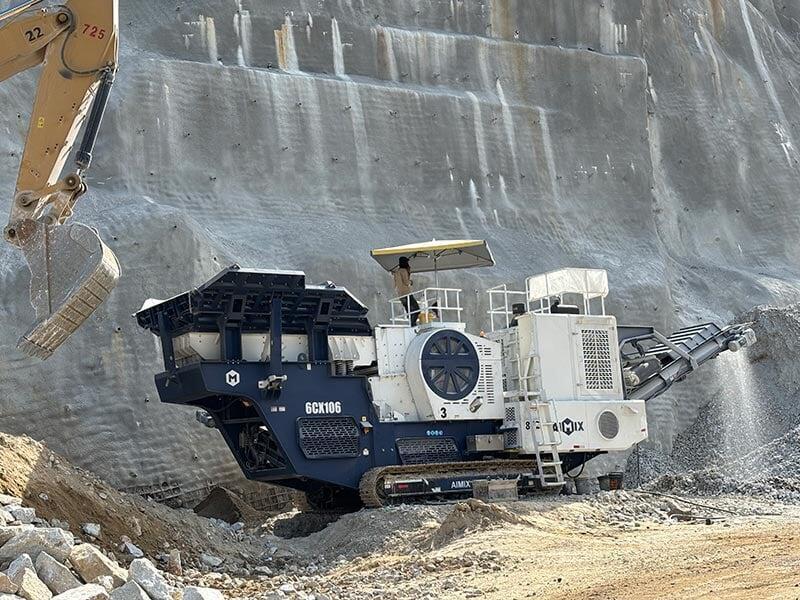
Compressive Strength and the Mohs Scale
The most significant differentiator is compressive strength. Granite typically exhibits a compressive strength in the range of 150 to 300 MPa, owing to its interlocking crystalline structure of quartz and feldspar. On the Mohs scale, it registers a hardness of 6 to 7. Limestone, conversely, possesses a compressive strength of only 30 to 60 MPa, with a Mohs hardness of 3 to 4. This means that the energy required to fracture a ton of granite is substantially higher. A crusher that processes granite is operating under immense point loads and high crushing forces, whereas a limestone crusher is primarily subjected to lower-stress, cleavage-based fracturing.
Abrasive Index and Silica Content
Granite is a siliceous rock, containing a high percentage of free silica. This free silica acts as an abrasive compound, acting upon the manganese steel liners of the crusher like a file on soft metal. The Abrasive Index for granite is high, often exceeding 0.5. Limestone, being a carbonate rock, is much softer on the abrasive index, typically scoring below 0.1. This means that the wear rate on a jaw crusher or cone crusher processing granite is exponentially higher than one processing limestone, necessitating entirely different liner profiles and metallurgies.
2. Equipment Selection and Stage Crushing
The distinct physical characteristics of these rocks dictate not only the type of crusher used but also the number of crushing stages required to achieve the desired product gradation.
Primary Crushing: Jaw vs. Impact
For primary crushing, granite demands a robust compression crusher, typically a jaw crusher. The jaw's reciprocating motion and high crushing force are necessary to break down the tough crystalline structure. While an impact crusher can process granite, it will experience catastrophic wear on its blow bars due to the high silica content. Limestone, however, is ideally suited for an impactor as a primary. The impact force shatters the relatively soft stone along its natural bedding planes. The wear on the blow bars is considerably less, and the impact crusher produces a higher percentage of cubical product in a single pass, often rendering a secondary stage unnecessary.
Secondary and Tertiary: Cone vs. Horizontal Shaft Impact
For secondary reduction, granite is almost exclusively processed using a cone crusher. The cone's compression mechanism is effective at creating a well-graded, cubical product from tough, abrasive feed. The closed-side setting can be precisely controlled to manage the final size. Limestone, however, is often sent through a Horizontal Shaft Impact (HSI) crusher in the secondary stage. The HSI is a high-speed machine that excels at creating a cubical product from softer, less abrasive materials. For limestone, the HSI is a highly efficient tool for producing asphalt and concrete specs.
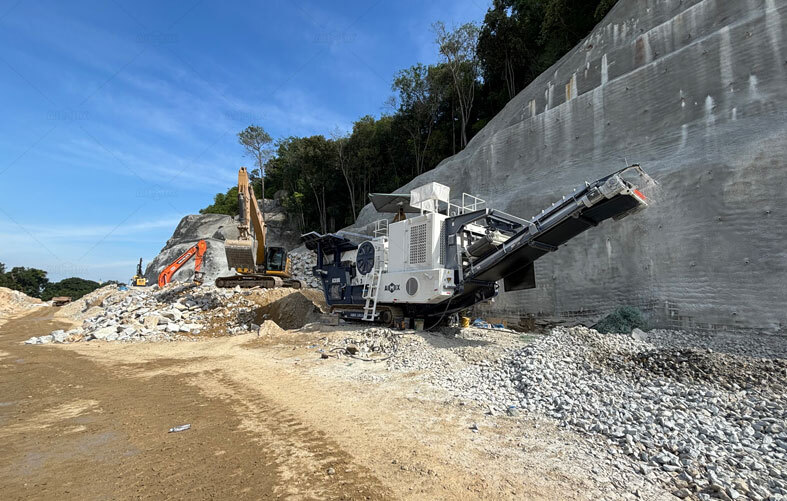
The selection of liner material is the single most critical maintenance decision for a granite operation. For limestone, the focus is on throughput and shape.
Manganese Content and Profiles
For granite, high-manganese steel, typically 18% to 22% content, is the standard. This alloy is designed to work-harden under the impact of hard rock. The profile of the liner is often heavier and more aggressive to withstand the high compressive forces. The liners must be changed frequently, and the wear pattern is monitored meticulously. For limestone, lower manganese content (12-14%) is often sufficient, and the liner profile can be designed for high throughput rather than extreme wear resistance. The wear is more uniform, and the change-out intervals are much longer, reducing maintenance downtime.
Crushing Chamber Design and Feed Distribution
The geometry of the crushing chamber is also tailored to the rock. A granite crusher machine must have a large feed opening and a deep chamber to accommodate the bulky, dense feed. The chamber is designed to ensure that the rock is subjected to the crushing force for the maximum amount of time to achieve reduction. For limestone, the chamber can be shallower, as the rock fractures more easily. The focus is on achieving high velocity and throughput to maximize tons per hour. Understanding these requirements ensures that the crusher is always operating within its optimal performance envelope.