Drainage channels and culverts may appear smaller than bridges or highways, but their concrete requirements can be surprisingly fragmented. A rural road project may involve dozens of culverts distributed across a long corridor, while urban drainage upgrades can require concrete at multiple locations with different access conditions. This makes conventional concrete delivery more complicated than it first appears. A stationary batching plant may be several kilometers away, and transporting small quantities of fresh concrete repeatedly can consume valuable time while exposing the project to road conditions, traffic, and delivery delays. Flexible concrete production offers a different approach. Instead of treating concrete supply as a centralized service, contractors can move production closer to each work section. A mobile or self-loading mixer can produce concrete according to the actual progress of the drainage or culvert works, reducing dependence on fixed delivery schedules. For Zimbabwean contractors working on dispersed infrastructure projects, this flexibility can improve material coordination and make small-volume concrete placement more manageable.
Why Drainage and Culvert Construction Creates Irregular Concrete Demand
Multiple Work Locations Make Concrete Delivery More Complicated
A drainage project rarely consists of one continuous concrete pour. Culverts may be positioned at different chainages along a road, while side drains, headwalls, wing walls, channels, and inlet structures are constructed progressively. Each location can require a different quantity of concrete. Some sections may consume only a few cubic meters, while another structure requires considerably more. This fragmented demand creates a logistical challenge for conventional ready-mix delivery. Trucks must travel repeatedly between the batching plant and different work fronts, even when individual pours are relatively small.
Small Pours Can Make Transportation Disproportionately Expensive
The cost of concrete is not determined only by the material itself. Transportation, truck utilization, waiting time, fuel consumption, and minimum order quantities can all influence the delivered cost. When a project requires many small pours, these additional expenses can accumulate.
Excess Concrete Can Become Waste
Ordering a larger quantity than required creates another problem. Fresh concrete cannot simply be stored for a later culvert installation. If the actual requirement is smaller than the delivered volume, the surplus may require disposal or another immediate application. Flexible on-site production allows contractors to adjust batch quantities more closely to actual requirements.
How Flexible Concrete Production Fits Culvert and Drainage Projects
Production Can Move With the Construction Work
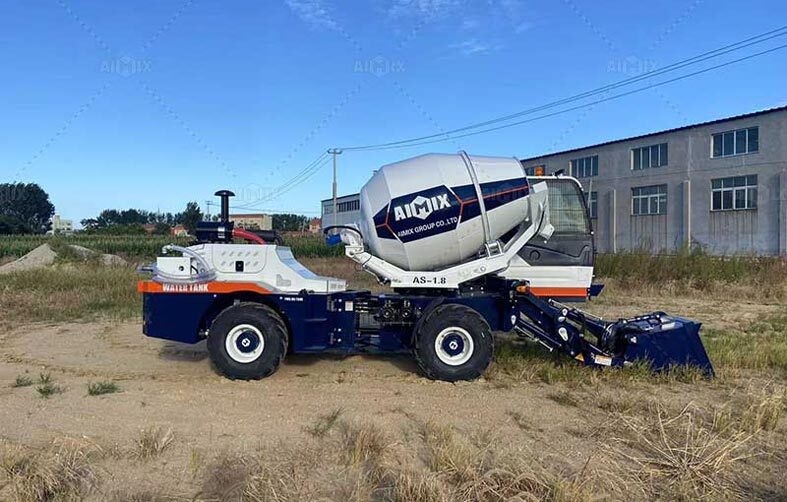
The greatest advantage of mobile concrete production is its ability to follow the active work front. A culvert crew can prepare one location while concrete production takes place nearby. After that section is completed, the equipment can relocate toward the next structure. This arrangement is particularly useful for road projects where drainage structures are distributed over considerable distances. Instead of repeatedly bringing fresh concrete from one distant fixed location, the production point can move closer to the area where concrete is currently needed.
Self-Loading Mixers Combine Material Handling and Mixing
A self-loading mixer can simplify the concrete production process by integrating several functions into one mobile machine. Depending on the equipment configuration, it can load aggregates, proportion materials, mix concrete, and transport the fresh mixture to the required location. For contractors researching a self loading concrete mixer for sale in Zimbabwe, this integrated arrangement can be especially relevant to projects with scattered concrete requirements. The machine does not need to remain permanently positioned beside a batching plant. It can travel with the construction operation, producing concrete in accordance with the sequence of work.
Useful for Remote Road Sections
Culvert construction frequently extends into rural or remote areas where access to commercial ready-mix suppliers may be limited. A mobile mixing solution can provide greater autonomy in these locations. Raw materials can be delivered to the project, while concrete is produced closer to each structure.
Flexible Production Helps Match Concrete Output to Actual Demand
The production requirement for drainage infrastructure can change rapidly. One day may involve several small culvert bases; another may focus on larger headwalls or drainage channels. An appropriately sized mobile mixer can adapt production to these changing requirements. This can be more efficient than maintaining a rigid delivery schedule based on predetermined truckloads.
What Contractors Should Consider When Choosing Concrete Equipment
Capacity Should Match Culvert Construction Requirements
A larger mixer is not automatically a better investment. Contractors should consider the average batch size, number of structures completed per day, required pouring rate, and total project duration. If the equipment is consistently underutilized, excessive capacity can increase capital and operating costs without improving productivity. Conversely, insufficient output can force crews to wait for additional batches and reduce construction efficiency. The ideal configuration should correspond to the project's actual production rhythm.
Mobility and Terrain Are Important Selection Factors
Zimbabwean infrastructure projects can involve unpaved roads, uneven terrain, narrow access routes, and changing work areas. Equipment mobility should therefore be considered alongside mixing capacity. A mobile mixer needs to reach material stockpiles, move between culvert locations, and operate safely near the construction area.
Consider Material Supply at the Jobsite
Flexible concrete production still depends on a dependable supply of cement, aggregates, and water. Before purchasing equipment, contractors should evaluate how these materials will reach the project and where they can be stored. Good material logistics are essential. A highly mobile mixer cannot compensate for an unreliable supply of basic ingredients.
Compare Equipment Cost With Repeated Delivery Costs
Contractors looking for a concrete mixer for sale in Zimbabwe should evaluate the purchase decision against the total cost of concrete supply over multiple projects. The comparison should include:
Ready-mix concrete purchase costs
Delivery and transportation charges
Minimum order requirements
Potential concrete wastage
Travel distance between supplier and worksite
Fuel and labor costs
Equipment maintenance and depreciation
The economics can become more favorable for self-production when the contractor regularly undertakes dispersed drainage, culvert, road, or infrastructure projects.
Flexible Concrete Supply Can Improve Project Continuity
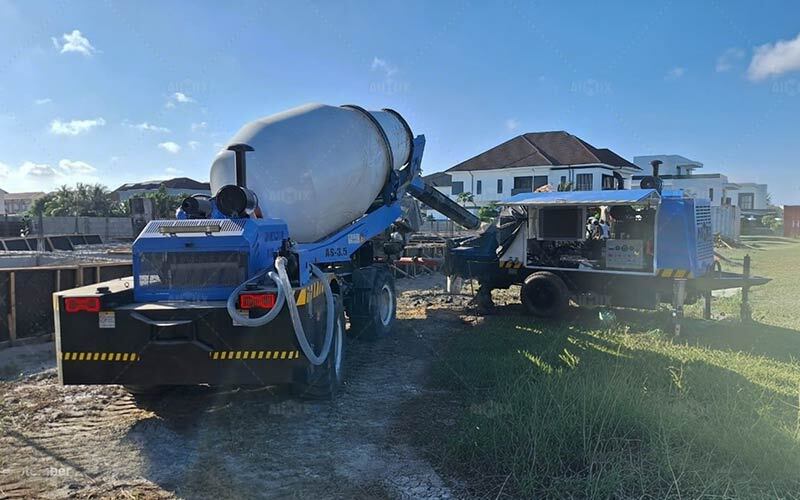
Drainage and culvert construction depends on steady progress. If a concrete delivery is delayed, a crew may be unable to complete formwork, install headwalls, or finish a structural section. Flexible production reduces reliance on a distant supplier's dispatch schedule. Contractors can organize concrete production around their own construction sequence. That does not mean ready-mix delivery is unsuitable. Large continuous pours may still be more efficiently supplied by a centralized batching plant. However, dispersed infrastructure projects require a different logistical philosophy.
Mobile Production Turns Concrete Supply Into a More Adaptable Process
The core challenge in Zimbabwean drainage and culvert construction is not simply producing concrete. It is producing the right quantity at the right location without allowing transportation logistics to slow the project. A self loading cement mixer in Zimbabwe can provide a practical solution for contractors handling multiple work fronts, remote road sections, and intermittent concrete demand. By combining loading, mixing, and mobile transportation, the equipment can reduce the number of separate operations required to deliver concrete. For contractors comparing a concrete mixer for sale in Zimbabwe, the most important consideration is therefore not only purchase price or theoretical output. Site accessibility, project duration, concrete demand, material availability, and expected equipment utilization should all be evaluated together. When these factors are aligned, flexible concrete production can make drainage and culvert construction more responsive, reduce unnecessary concrete transportation, and help infrastructure crews maintain a steadier construction rhythm across Zimbabwe's widely distributed project sites.