Moving heavy concrete equipment through Guatemala is not simply a matter of arranging a transport truck and choosing the shortest route. Mountain roads can combine steep gradients, sharp curves, narrow passages, uneven pavement, loose aggregate, and rapidly changing weather conditions. For contractors operating a self loading concrete mixer in Guatemala, these conditions influence transport planning, machine stability, fuel consumption, road access, and even the choice of equipment configuration. A machine that performs efficiently on relatively flat construction sites may face very different demands when transferred between mountainous communities, highway projects, and remote building sites.
The challenge becomes more pronounced when the equipment must travel repeatedly between projects. Excessive transport time can reduce productive working hours, while poor route selection may increase mechanical stress and create unnecessary recovery risks. Contractors therefore need to assess not only the truck's operating capacity but also its dimensions, gross weight, drivetrain, ground clearance, tire configuration, turning radius, and ability to cope with gradients. Careful mobility planning can turn difficult mountain logistics from a recurring bottleneck into a manageable part of project operations.
Assess the Road Before Moving Heavy Mixer Equipment
Check Gradients, Curves, and Road Width
Guatemala's mountainous terrain requires more than a basic distance calculation. A route that appears short on a map may contain steep climbs, hairpin bends, narrow bridges, or sections where two heavy vehicles cannot pass comfortably. Contractors should inspect the road gradient, curve radius, surface condition, and available clearance before dispatching equipment.
Sharp bends are particularly important for long or high-profile machinery. The available turning space affects both transport vehicles and the mixer itself, especially when entering rural construction sites. Temporary obstacles such as roadside drainage works, parked vehicles, construction materials, or rockfall can further reduce usable road width.
Consider Surface Conditions and Seasonal Access
Mountain roads can change considerably after heavy rainfall. Mud, loose gravel, erosion, and damaged shoulders may reduce traction and make heavy equipment more difficult to control. During the wet season, a route that was previously suitable may require additional inspection before transportation begins.
Route planning should therefore include weather forecasts, recent road conditions, bridge limitations, and possible detours. For remote projects, it is also useful to identify recovery points and alternative access roads rather than relying on a single route.
Match Mixer Mobility With Mountain Construction Conditions
Evaluate Drivetrain and Gradeability
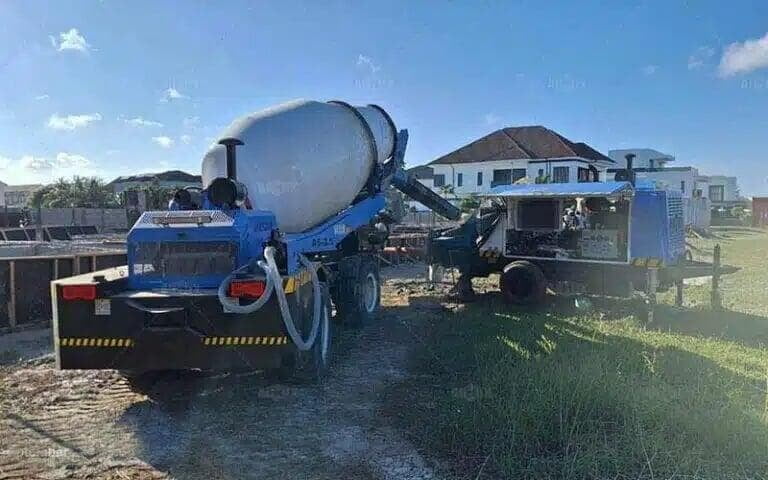
When selecting a concrete self loading mixer for mountainous projects, contractors should look beyond concrete output. The drivetrain determines how effectively the machine can climb gradients, negotiate uneven ground, and maintain traction when the surface becomes loose or slippery.
Four-wheel drive, appropriate axle configuration, sufficient ground clearance, and a powertrain designed for demanding terrain can reduce mobility limitations. These characteristics become especially relevant when the mixer must leave paved roads and enter unfinished access tracks leading to residential, infrastructure, or rural construction sites.
Check Dimensions, Weight, and Transport Requirements
Overall dimensions can be just as important as engine power. A machine with a large turning radius may encounter difficulties on narrow mountain roads even when its climbing performance is adequate. Contractors should verify vehicle width, height, wheelbase, operating weight, and loading dimensions before transportation.
Bridge load limits deserve particular attention. A heavy machine may need to cross older bridges or temporary structures with restricted capacity. Where necessary, route engineering should confirm whether the transport configuration complies with local road and bridge limitations.
Plan for Safe Transfer Between Mountain Project Sites
Reduce Unnecessary Empty Travel
Repeated equipment relocation can consume a significant portion of a contractor's schedule. Moving a mixer between distant projects without considering the next concrete requirement can create unproductive travel hours and increase fuel and maintenance expenditure.
A better approach is to coordinate equipment movement with the construction sequence. When several projects are located within the same mountainous region, scheduling nearby work consecutively can reduce repositioning frequency. This is particularly useful for contractors handling scattered residential foundations, road structures, retaining walls, and small infrastructure projects.
Prepare the Machine for Long-Distance Movement
Before a transfer, contractors should inspect tires, brakes, steering components, hydraulic systems, lights, fluid levels, and structural connections. Heavy equipment moving through steep terrain places additional demands on braking and drivetrain systems.
The mixer drum and loading mechanism should also be secured according to the manufacturer's transport requirements. Any loose tools, attachments, or materials should be removed or properly fastened. A short pre-trip inspection can prevent a minor mechanical issue from becoming a prolonged roadside interruption.
Balance Transportability With Concrete Production Needs
Consider Where Concrete Will Be Produced
Mountain logistics often make conventional concrete supply less flexible. Ready-mix trucks may face long travel distances, narrow access roads, and delays caused by difficult terrain. For projects located far from commercial batching facilities, producing concrete closer to the work area can simplify scheduling.
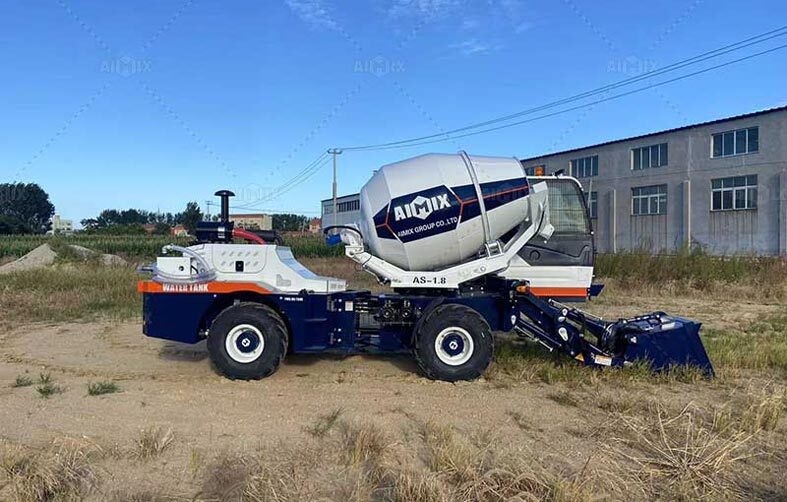
A mobile self loading concrete mini mixer can load aggregates, add cement and water, mix the concrete, and travel directly to the placement location. This operating model can be useful where conventional concrete delivery is constrained by distance or road accessibility. The important point is not simply machine mobility; it is how mobility changes the concrete supply chain.
Look at Total Project Logistics
Equipment selection should ultimately be evaluated against the entire project workflow. A machine with suitable mobility but insufficient production capacity may create another bottleneck, while an oversized unit may increase transportation difficulties.
Contractors should compare expected concrete demand, site access, relocation frequency, road conditions, required output, operator requirements, and maintenance support. In mountainous Guatemala, the most suitable equipment is often the configuration that maintains a workable balance between production capability and physical accessibility.
Key Questions Before Moving Heavy Mixer Equipment
Use a Pre-Transport Checklist
Before moving heavy mixer equipment across mountain roads, contractors can review several practical questions:
Can the selected route accommodate the machine's width, height, and turning radius?
Are bridges and culverts suitable for the total transport weight?
What gradients and road surfaces will the machine encounter?
Will rainfall or seasonal erosion change road accessibility?
Is the drivetrain suitable for steep and uneven terrain?
Can the machine reach the construction site without excessive detours?
How frequently will the equipment need to move between projects?
Are local maintenance and recovery resources available along the route?
These questions help shift equipment planning from a simple transportation decision toward a broader operational assessment. For contractors working across Guatemala's mountainous regions, reliable mobility is closely connected with concrete supply, project scheduling, equipment utilization, and site productivity. The objective is not merely to move a heavy mixer from one location to another, but to ensure that the machine arrives safely, reaches difficult sites efficiently, and remains productive once construction begins.