Europe’s urban landscape is undergoing a profound transformation. Aging infrastructure, historical building redevelopment, and rising demand for sustainable construction practices are driving a new era of urban renewal. Behind every demolished structure lies a complex challenge: how to process massive volumes of concrete, brick, and mixed construction waste without creating unnecessary transportation burdens or environmental pressure. Traditional stationary recycling systems often require fixed locations, extensive preparation, and long-term material transportation. However, demolition projects in European cities are rarely static. They move from one neighborhood to another, operate within restricted spaces, and must adapt to changing site conditions. This is where mobile track crushers demonstrate a unique advantage. By bringing crushing capability directly to demolition sites, these machines transform waste processing from a distant disposal activity into an integrated resource recovery process.
Why European Urban Renewal Requires More Flexible Waste Processing Solutions
Demolition Waste Has Become a Strategic Resource
Urban renewal is no longer simply about removing old structures. It is increasingly focused on recovering valuable construction materials and reducing dependency on natural resources. Concrete from demolished buildings can often be processed into recycled aggregates for road bases, foundations, drainage layers, and new construction applications. This circular approach aligns with Europe’s growing emphasis on resource efficiency and sustainable construction. Instead of transporting demolition waste to disposal facilities and importing new aggregates from quarries, contractors can establish a localized recycling loop directly at the project site. However, demolition waste is generated in unpredictable locations. One project may involve removing an old residential block in a dense city center, while another may require clearing industrial structures on the outskirts. The mobility of processing equipment becomes a critical factor.
Urban Construction Sites Create Unique Operational Constraints
European demolition projects often operate under strict spatial limitations. Narrow access roads, limited working areas, noise regulations, and surrounding buildings create challenges that conventional stationary plants cannot easily overcome. A fixed crushing plant requires a dedicated area for installation, material feeding, stockpiling, and transportation logistics. In contrast, a mobile track crusher can enter the construction zone, process demolition materials nearby, and move when the project phase changes. This operational flexibility creates a more adaptive workflow. The crusher becomes part of the demolition ecosystem rather than an external processing facility.
How Mobile Track Crushers Improve Demolition Waste Processing Efficiency
Processing Waste Directly Where It Is Generated
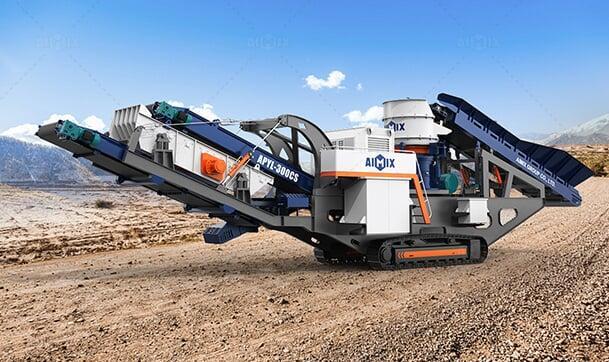
The greatest advantage of mobile track crushers is their ability to shorten the distance between demolition and recycling. Transportation is one of the hidden costs in demolition waste management. Every truck movement consumes fuel, increases emissions, and adds logistical complexity. By crushing concrete directly at the demolition site, contractors can reduce material hauling requirements significantly. Large concrete blocks can be transformed into usable aggregate within the same project boundary. This localized processing model creates a more streamlined material flow. Waste becomes a construction input rather than a disposal problem.
Reducing Transportation Dependency
In densely populated European cities, transportation efficiency has become increasingly important. Heavy trucks moving through urban areas face traffic restrictions, limited access periods, and environmental regulations. Portable crushers reduce reliance on external hauling operations. Fewer truck movements mean reduced congestion, lower emissions, and improved coordination between demolition and reconstruction activities.
Supporting On-Site Aggregate Production
Recycled aggregate produced by mobile crushing equipment can often be reused immediately. This eliminates unnecessary storage periods and allows contractors to integrate recycled materials into subsequent construction stages. The result is a more circular construction process where demolished concrete begins a second life within the same urban regeneration project.
Track Mobility Provides Superior Adaptability
The tracked undercarriage design gives mobile crushers exceptional maneuverability across complex construction environments. Unlike wheeled equipment that depends heavily on prepared surfaces, track-mounted machines can travel across uneven demolition zones, compacted soil, and partially cleared areas. This characteristic is particularly valuable during large-scale urban renewal projects where site conditions change continuously. A demolition site is rarely a perfectly organized workspace. There may be remaining structures, temporary access routes, and changing material piles. Track mobility allows the crusher to adjust its position according to actual operational requirements.
Why Mobile Track Crushers Match the Future of Sustainable European Construction
Supporting Low-Carbon Demolition Strategies
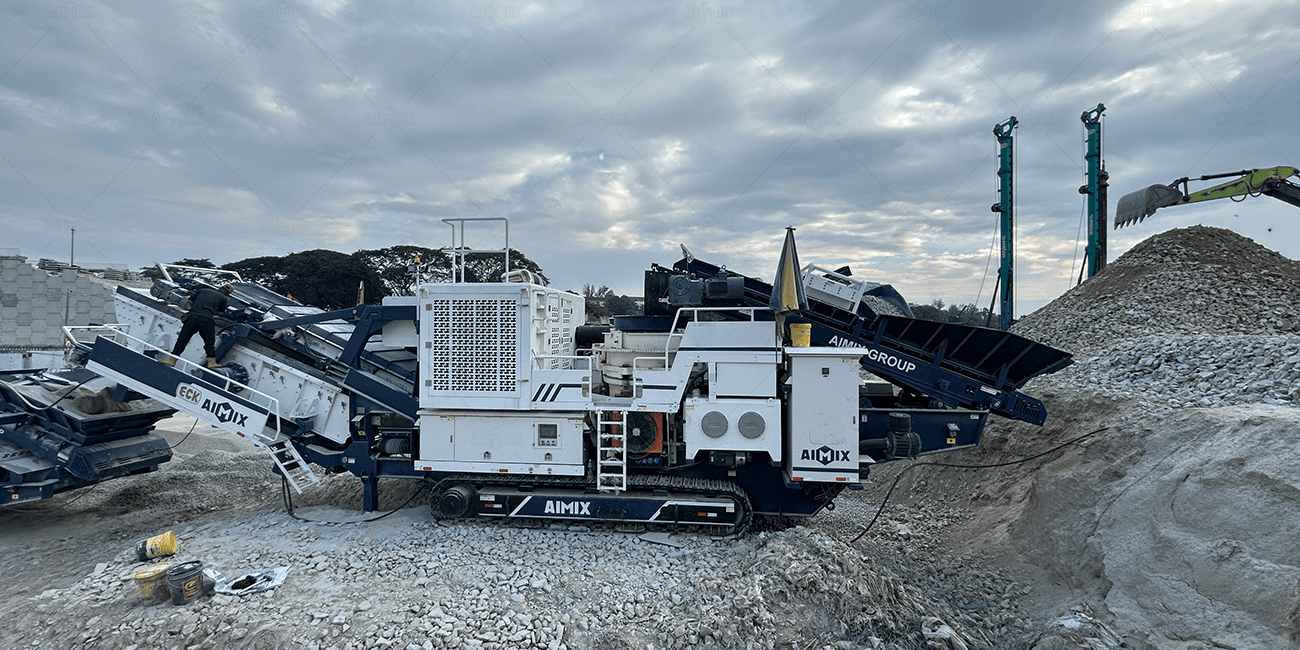
Sustainable demolition is becoming an essential component of modern European construction. Reducing landfill dependency and minimizing material transportation are key objectives in achieving lower-carbon building practices. Mobile track crushers contribute to this strategy by improving material recovery efficiency. Less waste transportation means lower fuel consumption, while recycled aggregates reduce demand for newly extracted stone resources. The environmental benefit extends beyond individual projects. When recycled materials become a normal part of construction supply chains, urban renewal can become more resource-conscious and less dependent on traditional extraction industries.
Combining Mobility with Advanced Crushing Technology
Modern mobile track crushers are not simply portable versions of traditional crushers. They integrate advanced crushing chambers, intelligent control systems, efficient screening options, and optimized material handling designs. These technologies allow contractors to achieve consistent recycled aggregate quality while maintaining operational flexibility. For demolition companies, this represents a shift from equipment ownership toward process optimization. The crusher is no longer just a machine for reducing material size; it becomes a mobile recycling platform capable of supporting multiple urban projects.
A New Model for European Urban Regeneration
The future of urban renewal will depend on how effectively cities manage existing resources. Construction waste disposal will increasingly be viewed as a secondary raw material rather than an unwanted by-product. Mobile track crushers fit this transformation because they match the fundamental characteristics of modern demolition work: decentralized locations, changing conditions, environmental responsibility, and the need for rapid deployment. In European urban renewal projects, flexibility is becoming as important as processing capacity. Equipment that can move with the project, recycle materials locally, and reduce logistical pressure provides a decisive advantage. Mobile track crushers represent this new philosophy of construction — turning demolition sites into temporary recycling hubs and helping cities rebuild with fewer resources and greater efficiency.