Selecting a small concrete batching plant is a significant investment that will directly impact your operational efficiency and profitability for years to come. Navigating this purchase without a clear plan can lead to costly mismatches between the equipment and your actual business needs. This guide provides a structured, essential checklist to methodically evaluate your options. By following these steps, you will move from a position of uncertainty to one of informed confidence, ensuring the small concrete batch plant you acquire is not just a piece of machinery, but a reliable partner engineered for your specific success. The process begins not with brochures, but with an honest assessment of your own operational reality.
Establishing Your Operational Baseline: Defining Needs Before Specifications
Before examining a single machine, you must first establish a clear operational baseline. This requires a detailed analysis of your current and projected business. Determine your true average and peak daily concrete production requirements in cubic meters. A plant's theoretical maximum output is less important than its ability to consistently meet your specific demand without excessive strain or wasteful idle time. Consider the variety of mix designs you will produce; a plant that only handles a single standard mix is fundamentally different from one that must switch frequently between different recipes for structural concrete, paving, and masonry.
Concurrently, perform a thorough site evaluation. Identify all spatial constraints, access points for raw material delivery (cement bulkers, aggregate trucks), and the available utilities, particularly electrical power. The necessary three-phase power supply and its amperage must be confirmed. The soil bearing capacity for the plant's foundations is also a critical, often overlooked, factor. This upfront groundwork prevents the costly mistake of purchasing a plant that is physically or logistically incompatible with your location, ensuring a smooth installation and commissioning process.
Technical Specifications and Build Quality Scrutiny
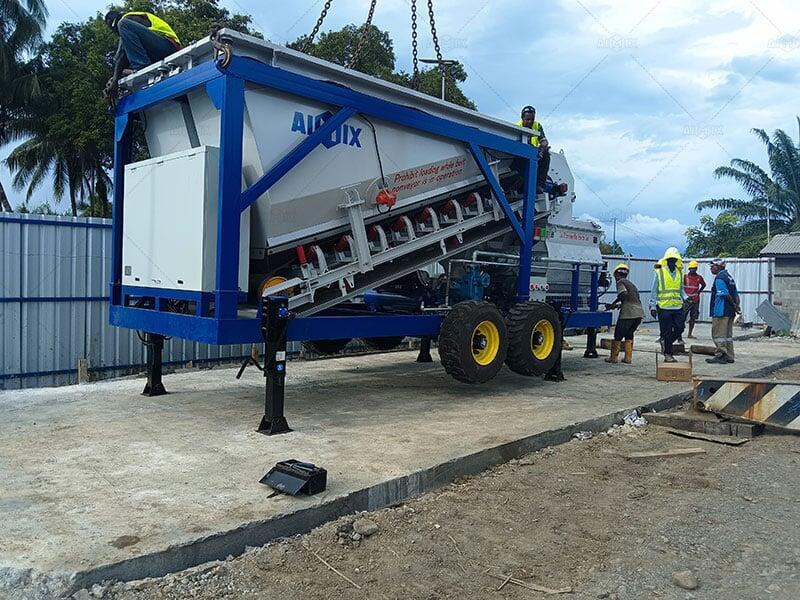
With your operational parameters defined, you can now meaningfully scrutinize technical specifications. Focus on the quality of core components, as these determine longevity and reliability. Examine the construction of the mixer unit—the gearbox rating, the drum's steel thickness, and the design of the mixing blades. The batching system's precision is non-negotiable. High-quality, hermetically sealed load cells for aggregates and cement, coupled with accurate water meters and admixture dispensers, are essential for consistent, specification-compliant concrete. Inferior weighing systems lead to material overuse, profit erosion, and potential strength issues.
Evaluate the level of automation offered. A basic manual or semi-automatic control system has a lower entry cost but requires more operator intervention and is prone to human error. A fully automated system with a programmable logic controller (PLC) and recipe storage ensures repeatable accuracy, provides production reports, and often includes features like aggregate moisture compensation. The control system's user interface should be intuitive and robust enough for your operating environment. This technical scrutiny separates durable, precision-engineered assets from assemblies of substandard components.
Supplier Evaluation and Post-Purchase Support Structures
The credibility of the supplier is as important as the quality of the mini concrete batch plant. Conduct thorough due diligence on any prospective manufacturer or dealer. Investigate their business history, request a list of recent clients for references, and, if possible, visit an existing installation to see the equipment in operation. A reputable supplier will be transparent and encourage this verification. Be wary of entities that cannot provide verifiable contact information or a physical business address.
Explicitly clarify the post-purchase support structure. Obtain the warranty documentation in writing, noting the duration, what components are covered, and the specific terms for labor. Crucially, inquire about the availability of spare parts. A reliable supplier will maintain a local inventory of common wear parts or have an efficient system for sourcing them. Ask about the availability of technical support—can they dispatch a qualified technician if needed, and what are the expected response times? A comprehensive service agreement can provide predictable maintenance costs and proactive care, safeguarding your investment far beyond the warranty period.
Financial Analysis and Total Cost of Ownership Projection
Finally, conduct a comprehensive financial analysis that looks beyond the initial purchase price. Develop a Total Cost of Ownership (TCO) model for each ready mix concrete batching plant under consideration. This model should include not only the purchase price but also estimated costs for installation, commissioning, routine maintenance, wear parts, energy consumption, and potential future upgrades over a five to seven-year period. A plant with a slightly higher initial cost but significantly lower operating expenses will often prove more economical in the long run.
Explore the financing options available, whether through the supplier, a bank, or an equipment leasing company. Calculate a realistic Return on Investment (ROI) timeline based on your projected increase in production capacity, reduction in labor costs, and improved material efficiency. This disciplined financial projection transforms the purchase from a capital expense into a strategic investment with a clear pathway to profitability. By following this essential checklist, you equip yourself to make a discerning, confident decision that aligns your new concrete batching plant perfectly with your business ambitions and operational requirements.