The imperative for sustainable construction practices has catalyzed a re-evaluation of traditional material supply chains, particularly within the aggregate production sector. Conventional methods reliant on fixed quarries and extensive truck transport are inherently carbon-intensive and geographically disruptive. In this context, portable crushing plant technology emerges not merely as a logistical alternative, but as a foundational instrument for substantively reducing the environmental footprint of construction and demolition activities. By relocating the processing function directly to the source of raw material or waste, this technology systemically addresses multiple vectors of environmental impact. Its sustainability proposition is tripartite: it drastically curtails emissions associated with material transport, enables the practical realization of a circular economy for construction materials, and incorporates design efficiencies that minimize its own operational resource consumption.
On-Site Material Processing: The Elimination of Haulage Emissions
The most direct and quantifiable environmental benefit of portable crushing plants is the radical reduction of haulage-related emissions. In a traditional model, blasted rock is transported by heavy-duty trucks from a primary quarry to a stationary processing plant, often over significant distances. The processed aggregate is then reloaded and transported again to various construction sites. This creates a double-handling scenario with a substantial carbon cost from diesel combustion. A portable crushing unit inverts this paradigm. The plant is mobilized to the material source, whether a greenfield quarry site or a specific project location with usable stone. Processing occurs in situ, and the finished aggregate can be stockpiled for direct use on that project or loaded for a single, shorter trip to a nearby site.
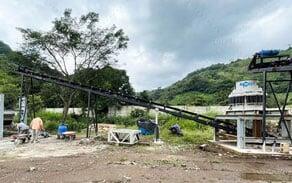
This logistical compression results in a dramatic decrease in vehicle miles traveled (VMT) by heavy trucks. The associated reduction in greenhouse gas (GHG) emissions, nitrous oxides (NOx), and particulate matter (PM) is profound. Furthermore, it alleviates secondary environmental and social costs: less heavy traffic reduces road wear and maintenance, decreases noise pollution in communities surrounding quarries and along transport corridors, and enhances worksite safety by minimizing vehicle movements. The portable plant thus functions as a point-source solution, collapsing a linear, transport-intensive supply chain into a compact, localized production node.
Circular Economy Integration: In-Situ Recycling of Construction Demolition Waste
Portable crushing technology is the critical enabler for closing the material loop on construction and demolition (C&D) sites. Mountains of concrete, asphalt, and brick debris, traditionally destined for landfill, represent a stranded resource. A mobile rock crusher, particularly a track-mounted unit, can be deployed directly to a demolition site or a centralized C&D waste yard. It processes this inert debris into sized recycled concrete aggregate (RCA) or recycled asphalt product (RAP) on location.
This in-situ recycling delivers a dual environmental victory. First, it diverts massive volumes of material from landfill, conserving limited airspace and mitigating the leaching risks and land use impacts of waste disposal. Second, and more critically, it displaces the demand for freshly quarried virgin aggregate. Every ton of RCA used as road base or backfill prevents the extraction, processing, and transport of a ton of natural stone, thereby conserving geological resources and preserving natural landscapes from quarrying activity. The portable crusher transforms a liability—demolition waste—into a legitimate, high-value feedstock for new construction, establishing a practical, on-demand circular material economy.
Operational Efficiency and Resource Optimization
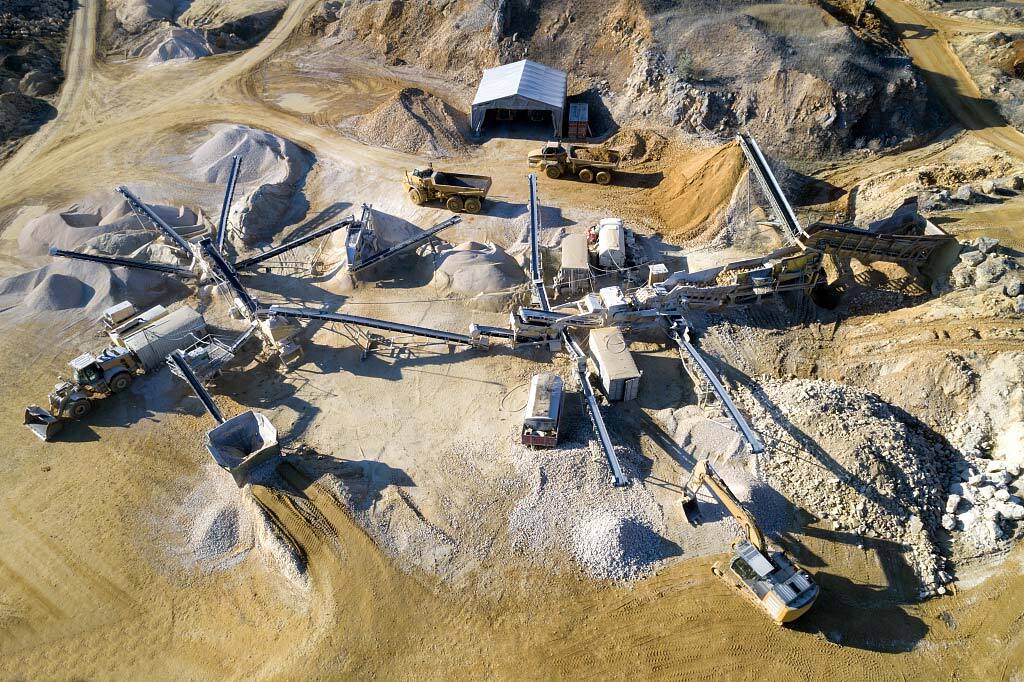
Modern portable crushing plants are engineered with sustainability principles embedded in their operational design, moving beyond their logistical advantages to minimize their own direct resource footprint. Energy efficiency is a primary focus. Advanced models utilize direct-drive aggregate crushers and screeners that reduce power transmission losses, and incorporate tier-4 final diesel engines or fully electric drive options that optimize fuel use or eliminate direct emissions at the point of operation. Intelligent control systems manage engine loads and plant sequencing to avoid energy waste during idle periods.
Water usage for dust suppression, a significant concern in arid regions, is also being re-engineered. Closed-loop misting systems with fine atomization nozzles maximize suppression effectiveness while minimizing water volume. Some systems integrate moisture sensors to activate suppression only when necessary. Furthermore, the very mobility of these plants promotes environmental stewardship by enabling selective, low-impact extraction. Instead of clearing large swathes of land for a fixed quarry, equipment can be moved to specific, small deposit areas, minimizing the surface disturbance and allowing for more rapid site rehabilitation. In essence, the technology's inherent flexibility is itself a sustainable attribute, allowing for a more precise and less invasive interaction with the project environment, from start to finish.