Mining operations in southern Tanzania often depend on infrastructure extending well beyond the main extraction area. Access roads, drainage channels, equipment foundations, workshops, fuel storage areas, and worker facilities all require reliable concrete supply during construction and ongoing maintenance. However, remote mining locations can be difficult to serve with conventional concrete delivery arrangements. Long distances from commercial batching facilities, variable road conditions, and changing construction schedules can make ready-mixed concrete deliveries less practical. A self loading concrete mixer offers an alternative for producing concrete directly at or near the work area. It combines aggregate loading, weighing, mixing, transportation, and discharge in one machine. This configuration allows mining contractors to prepare smaller or medium-sized concrete batches as required, without relying entirely on external concrete suppliers. For projects in regions such as Mtwara, Lindi, and Ruvuma, equipment selection should account for site accessibility, daily concrete demand, terrain, water availability, and the distance between material storage and pouring locations.
Concrete Requirements for Mining Infrastructure in Southern Tanzania
Access Roads and Drainage Construction
Mining access roads connect extraction areas with processing facilities, storage yards, accommodation compounds, and public transport routes. Although many road sections use compacted gravel or laterite, concrete remains necessary for culverts, drainage channels, bridge approaches, retaining structures, and erosion-control installations. Southern Tanzania experiences seasonal rainfall, making water management an important consideration around mining sites. Drainage structures must withstand runoff and protect road foundations from erosion. Contractors may also need concrete for road crossings, headwalls, and equipment access platforms.
Foundations and Auxiliary Mining Structures
Mining operations require more than road infrastructure. Concrete is commonly used for equipment bases, workshop floors, generator foundations, pump houses, maintenance facilities, and storage-area structures. These applications can involve different concrete grades and placement volumes. A self loading concrete mixer in Tanzania can support such work by producing batches close to the construction location. This is particularly useful when projects involve scattered work areas or relatively small concrete placements that do not justify frequent ready-mix deliveries.
Why Self-Loading Mixers Suit Remote Mining Locations
Integrated Material Loading and Concrete Production
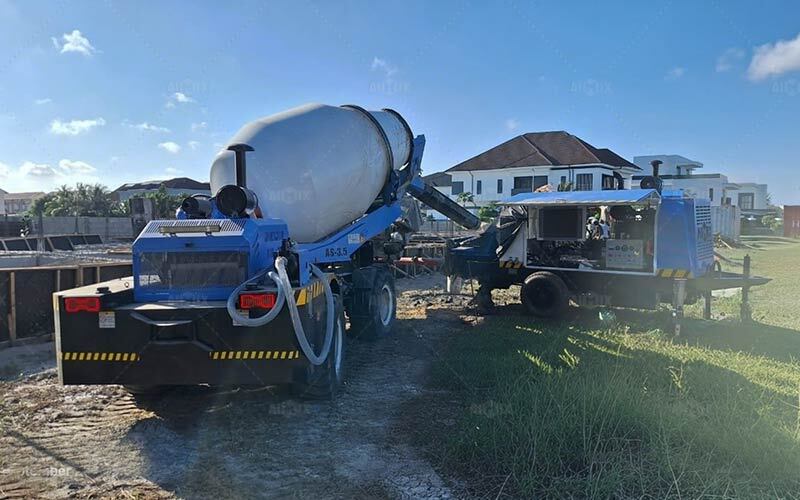
A self-loading mixer combines several operations in one machine. Its front loading bucket collects sand, aggregates, and cement, while the weighing system helps control material proportions. The mixing drum then produces concrete and transports it to the discharge point. This integrated arrangement reduces the need for separate loading and concrete transportation equipment on smaller projects. Operators can move between material stockpiles and pouring locations, preparing batches according to the work schedule. For mining contractors working far from established supply networks, this can simplify daily concrete production and reduce dependence on external delivery vehicles.
Flexible Movement Between Construction Areas
Mining infrastructure is often distributed across a relatively large site. A concrete mixer that can load, mix, and travel independently provides operational flexibility when crews move between drainage works, road structures, foundations, and auxiliary buildings. The machine's four-wheel-drive configuration, steering arrangement, ground clearance, and gradeability should be evaluated against actual site conditions. Steep access roads, loose gravel, muddy sections, and uneven working surfaces can affect maneuverability and productivity.
Selecting the Right Mixer Capacity for Mining Construction
Match Drum Capacity with Daily Concrete Demand
The appropriate mixer size depends on the volume and frequency of concrete placements rather than the overall size of the mining operation. Smaller machines may suit culverts, equipment pads, and scattered maintenance work, while larger models can support repeated road structures and building construction. Typical AIMIX self-loading mixer output references include:
| Model | Reference Output Capacity | Potential Applications |
|---|---|---|
| AS-1.8 | 7.2 m³/h | Small drainage structures and maintenance work |
| AS-2.6 | 10.4 m³/h | Culverts, small foundations, and access structures |
| AS-3.5 | 14 m³/h | Road infrastructure and equipment bases |
| AS-4.5 | 18 m³/h | Workshop floors and repeated structural pours |
| AS-5.5 | 22 m³/h | Higher-volume infrastructure construction |
| AS-6.5 | 24 m³/h | Large auxiliary structures and sustained concrete demand |
These figures are reference production capacities. Actual output depends on batch size, loading cycles, travel distance, concrete mix design, operator efficiency, and site conditions.
Consider Larger Equipment for Sustained Production
A large concrete mixer for sale in Tanzania may be worth considering when a mining contractor has several active work fronts or a sustained requirement for concrete production. Larger drum capacity can reduce the number of batches needed for a given placement volume. However, a larger machine also requires suitable access routes, maneuvering space, material handling arrangements, and maintenance support. Contractors should compare the expected daily workload with the machine's actual operating capacity before selecting a model.
Operating Considerations in Remote Mining Environments
Manage Aggregate and Water Supply
Consistent concrete production depends on reliable access to suitable sand, aggregates, cement, and clean mixing water. Mining contractors should establish material stockpiles close enough to the work area to limit unnecessary loading and travel cycles. Aggregate moisture content should also be checked, particularly during rainy periods. Changes in moisture affect the effective water content of the mix and can alter concrete workability and strength. Accurate proportioning is essential for foundations and other structural applications.
Plan Maintenance and Spare Parts Availability
Remote operations can face longer equipment service intervals and delays in obtaining replacement components. Before purchasing, contractors should confirm the availability of filters, hydraulic hoses, tires, wear components, and other routine maintenance parts. Daily inspections should cover the engine, hydraulic system, braking components, loading bucket, mixing drum, water system, and discharge mechanism. Regular cleaning is equally important because hardened concrete can accumulate inside the drum and affect mixing performance.
Comparing Self-Loading Mixers with Other Concrete Supply Options
When On-Site Mixing Is More Practical
A conventional batching plant can provide higher and more consistent production for large, concentrated construction projects. However, installation, aggregate storage, cement handling, and concrete transportation require additional planning. Ready-mixed concrete can suit projects located near established suppliers, provided delivery schedules and road access are reliable. For remote mining infrastructure with scattered, intermittent concrete requirements, a self loading mixer may offer a more adaptable arrangement.
Consider a Mixer Pump for Integrated Placement Requirements
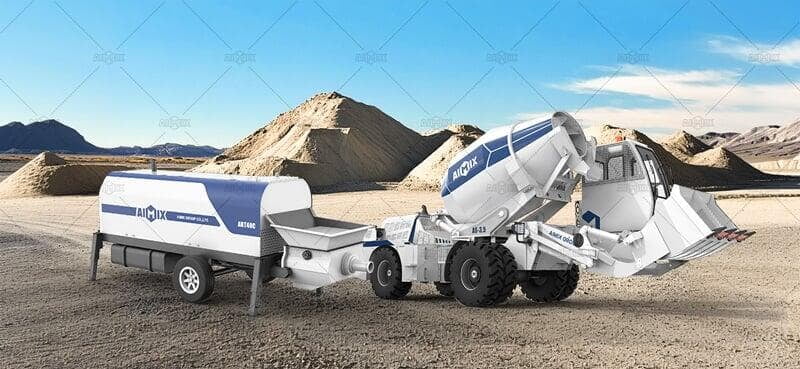
Where concrete must be mixed and pumped into foundations, retaining structures, or elevated sections, contractors may also evaluate a concrete mixer pump. This equipment combines mixing and pumping functions, although its suitability depends on pumping distance, concrete specifications, and site access. The choice should reflect the actual production and placement workflow rather than equipment price alone.
Purchasing Considerations for Mining Contractors
Before purchasing a mixer, contractors should confirm rated output, effective drum capacity, engine power, drive configuration, gradeability, weighing accuracy, and discharge arrangements. These specifications should be assessed against the terrain and concrete requirements of the intended mining site. A suitable concrete mixer machine in Tanzania should also have an appropriate maintenance arrangement and access to technical support. Buyers should request a detailed quotation covering the machine configuration, spare parts package, warranty, delivery arrangements, and operator training. For remote mining access roads and auxiliary structures in southern Tanzania, the right self-loading mixer is one that can maintain dependable concrete production across changing work locations and construction phases. Matching machine capacity with actual demand, site conditions, and maintenance resources helps contractors establish a practical concrete supply system without unnecessary equipment investment.