Contractors in the UAE often face an important procurement decision when planning residential developments, commercial buildings, industrial facilities, and infrastructure projects: should they invest in their own concrete production facility or continue purchasing ready-mixed concrete from local suppliers? Both options can support construction operations, but their financial implications differ considerably. Purchasing ready-mixed concrete avoids the initial equipment investment and reduces operational responsibilities. However, contractors with sustained concrete demand may find that owning a batching plant for sale in UAE offers greater control over production schedules, material costs, and concrete availability.
The right decision depends on several project-specific factors, including daily concrete consumption, construction duration, delivery distance, equipment investment, and operating expenses. Understanding these variables helps contractors compare the actual cost of the two supply methods rather than focusing exclusively on the initial purchase price.
1. Understanding the Two Concrete Supply Options in the UAE
Continue Purchasing Ready-Mixed Concrete from Local Suppliers
Purchasing ready-mixed concrete is a practical choice for contractors handling projects with relatively low or irregular concrete consumption. Local suppliers undertake aggregate batching, cement weighing, mixing, and transportation using transit mixers. Contractors only need to arrange deliveries according to their pouring schedules.
This arrangement eliminates the need to purchase production equipment, establish a batching site, recruit dedicated plant operators, or maintain mixing machinery. It is particularly suitable for small residential developments, renovation projects, and short-term construction contracts.
However, external supply also introduces certain dependencies. Delivery schedules may be affected by traffic congestion, supplier capacity, peak construction demand, and transportation distances. For projects requiring continuous concrete pouring, these uncertainties can complicate construction coordination.
Invest in a Ready Mix Concrete Plant in UAE
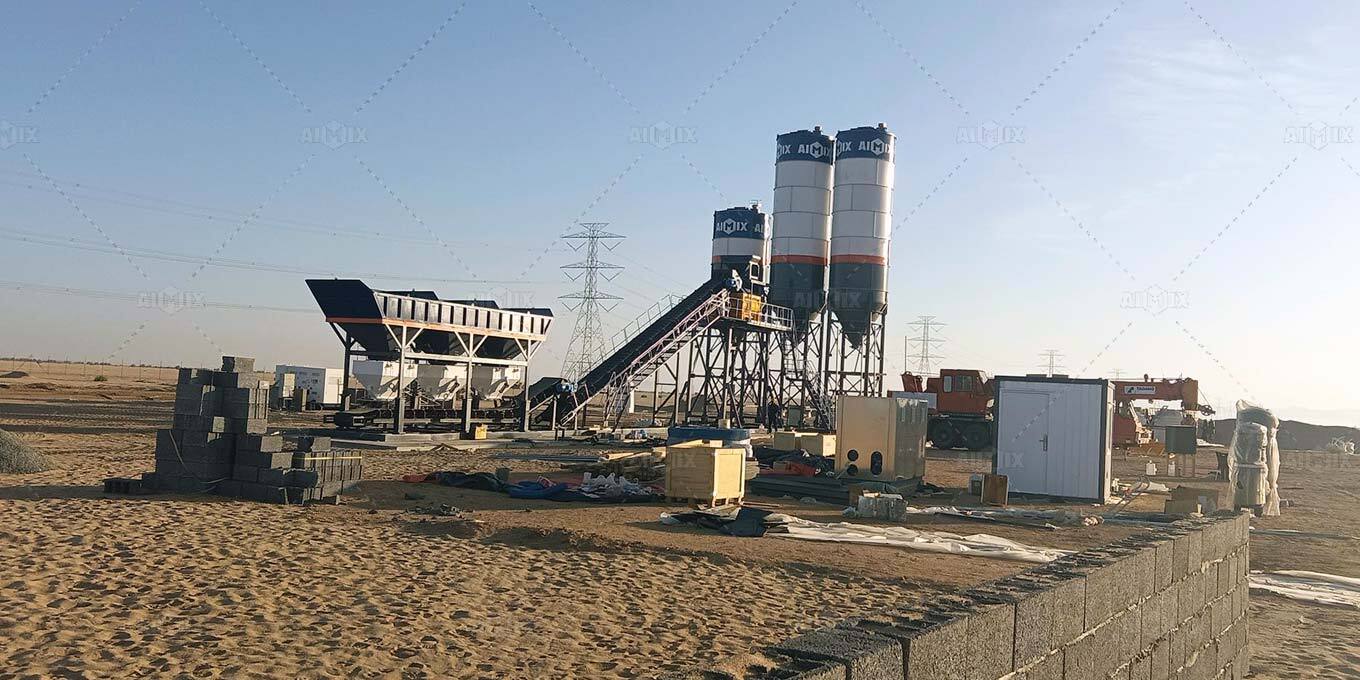
Purchasing a ready mix concrete plant in UAE allows contractors to produce concrete directly at their construction site or a dedicated production yard. The plant automatically measures aggregates, cement, water, and additives according to preset mix proportions before feeding them into the mixer.
Although equipment procurement requires a substantial initial investment, in-house production provides greater control over batching schedules, material inventories, and daily output. Contractors can also reduce their dependence on third-party concrete suppliers, particularly when managing multiple projects or large-volume pouring operations.
This option becomes increasingly attractive when concrete consumption remains relatively stable throughout the equipment's service life.
2. Compare the Investment and Operating Costs
How Much Does a Concrete Batching Plant Cost in UAE?
The concrete batching plant price in UAE depends on production capacity, configuration, mixer type, automation level, storage arrangements, and transportation requirements. A compact mobile plant generally requires a smaller investment than a high-capacity stationary installation.
The following figures are indicative budgeting ranges rather than verified UAE supplier quotations. Actual prices should be confirmed according to equipment specifications and delivery terms.
| Plant Configuration | Capacity Range | Estimated Equipment Price (USD) | Typical Application |
|---|---|---|---|
| Mini Batching Plant | 25–35 m³/h | $15,000–$35,000 | Small and medium projects |
| Mobile Batching Plant | 35–60 m³/h | $25,000–$60,000 | Multiple construction sites |
| Stationary Batching Plant | 60–120 m³/h | $40,000–$100,000+ | Long-term, high-volume production |
Beyond the equipment quotation, contractors should budget for site preparation, cement silos, electrical connections, installation, transportation, and commissioning. Aggregate storage, wheel loaders, water supply systems, and concrete transportation equipment may also contribute to the overall investment.
Compare the Recurring Expenses of Both Options
When purchasing ready-mixed concrete, the main expenditure is the supplier's delivered concrete price. Depending on the agreement, additional charges may apply for transportation, pumping, waiting time, or special concrete specifications.
Operating an in-house batching plant involves a different cost structure:
Raw materials: Cement, sand, aggregates, water, and chemical admixtures.
Labor: Plant operators, material handlers, and maintenance personnel.
Energy: Electricity or generator fuel consumption.
Maintenance: Mixer blades, conveyor belts, weighing sensors, and other wearing components.
Site expenses: Land rental, aggregate storage, utilities, and environmental management.
Contractors should compare the total production cost per cubic meter with the delivered price quoted by local suppliers. This provides a more reliable basis for calculating potential savings.
3. Which Option Is More Suitable for Different Construction Projects?
Small Residential and Short-Term Projects
For projects consuming approximately 10–30 m³ of concrete per day, purchasing ready-mixed concrete may be more economical, especially when construction lasts only several months. The contractor avoids equipment depreciation, installation expenses, and long-term maintenance commitments.
However, if several small projects operate simultaneously across different locations, transportation delays and minimum delivery requirements may increase procurement difficulties.
Large Commercial and Infrastructure Projects
For commercial developments, warehouses, industrial facilities, and infrastructure construction, daily concrete consumption can remain substantial for extended periods. Under these conditions, a dedicated batching facility may offer better production economics.
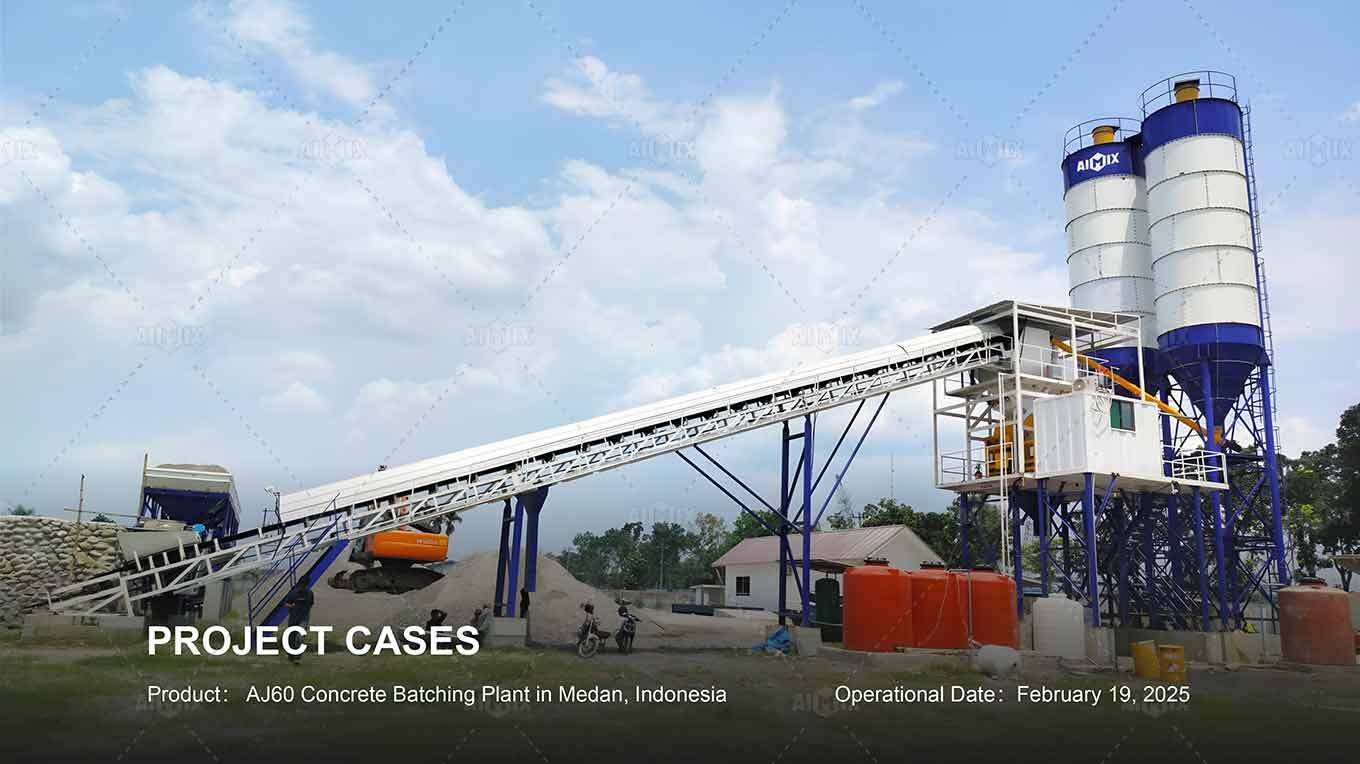
A stationary concrete batching plant in UAE is particularly suitable for contractors with a fixed production location, sufficient installation space, and continuous concrete demand. Its configuration can accommodate larger aggregate storage facilities, cement silos, and higher production capacities.
For contractors moving between projects, a mobile batching plant may be more practical because its modular structure allows easier transportation and relocation.
4. Calculate the Break-Even Point Before Purchasing
Estimate the Monthly Concrete Consumption
Before purchasing equipment, contractors should calculate their expected concrete consumption over the entire project period. For example, consider a contractor requiring 2,000 m³ of concrete monthly.
Assume the following illustrative figures:
| Cost Item | Purchasing Ready-Mixed Concrete | In-House Production |
|---|---|---|
| Concrete cost per m³ | $85 | $62 |
| Monthly consumption | 2,000 m³ | 2,000 m³ |
| Monthly concrete expenditure | $170,000 | $124,000 |
| Potential monthly difference | $46,000 |
In this hypothetical example, in-house production reduces the direct concrete production expenditure by $46,000 per month before equipment depreciation, financing, and other additional expenses.
Determine the Equipment Payback Period
If the complete plant investment amounts to $150,000 and the net monthly operating advantage is $30,000 after accounting for additional operating expenses, the estimated payback period is:
Payback Period = Initial Investment ÷ Monthly Net Savings
$150,000 ÷ $30,000 = 5 months.
This simplified calculation illustrates why high-volume contractors may benefit from owning production equipment. Actual payback periods depend on utilization rates, material procurement prices, labor costs, maintenance, financing, and the duration of concrete demand.
5. What Should UAE Contractors Check Before Buying a Batching Plant?
Production Capacity and Equipment Configuration
Select plant capacity according to peak hourly concrete demand rather than average daily consumption alone. Contractors should also consider mixer specifications, aggregate bins, cement silo capacity, weighing accuracy, and automation systems.
Installation Space and Environmental Requirements
Available land, vehicle access, power supply, water availability, dust control, and noise management all influence plant selection. Contractors should verify applicable local municipality and environmental requirements before establishing a production facility.
Supplier Support and Spare Parts Availability
Equipment reliability depends not only on manufacturing quality but also on technical support, operator training, spare parts supply, and maintenance assistance. A supplier capable of providing installation guidance and after-sales service can help reduce commissioning difficulties and unexpected downtime.
Conclusion: Buy a Plant or Continue Purchasing Ready-Mixed Concrete?
Neither purchasing ready-mixed concrete nor investing in a batching plant is universally superior. Contractors with short-term projects, limited consumption, or uncertain construction schedules may benefit from external concrete supply. Conversely, companies with stable demand, multiple projects, or substantial monthly consumption should evaluate the long-term financial advantages of owning production equipment.
The most reliable decision comes from comparing delivered concrete prices, actual in-house production costs, total equipment investment, and expected payback periods. With these figures established, UAE contractors can select a concrete supply strategy that supports both construction efficiency and long-term business profitability.