County road contracts in Kenya often involve concrete works spread across multiple locations, including drainage channels, culverts, bridge approaches, roadside structures, and small access roads. For contractors handling these projects, purchasing mobile concrete pumps is not simply a matter of comparing equipment quotations. The more consequential calculation is whether the machine can deliver the required concrete volume, move efficiently between work sections, and remain productive within the contract schedule. Transport arrangements, fuel consumption, spare parts, operator availability, and the distance from the concrete mixing point all influence the actual expenditure. The price of pumping equipment should therefore be evaluated against the structure of the road contract. A contractor working on several short drainage sections may need a different configuration from one placing concrete continuously along a long road corridor. By calculating equipment acquisition costs alongside operating expenses and expected utilization, Kenyan contractors can estimate the financial commitment more accurately and select machinery that suits their workload.
What Determines Mobile Concrete Pump Prices in Kenya?
Pumping Capacity and Equipment Configuration
The first pricing factor is the machine's rated output and pumping configuration. Smaller pumps may suit culverts, footpaths, roadside drains, and localized concrete repairs, while higher-output equipment can support larger pours and more demanding construction schedules. When comparing the price of concrete pump in Kenya, contractors should distinguish between rated pumping capacity and achievable output on site. Actual performance depends on the concrete mix, pumping distance, delivery height, pipeline arrangement, and interruptions during placement. A quotation should specify the engine type, pumping pressure, maximum aggregate size, pipeline package, control system, and included accessories. These details make it easier to compare machines with similar capabilities instead of choosing solely by purchase price.
Importation, Freight, and Inland Transport
Imported equipment costs extend beyond the supplier's quotation. Contractors may need to account for international freight, marine insurance, port handling, customs clearance, applicable taxes and duties, and transportation to the project location. The final landed cost depends on the machine's shipment dimensions, shipping terms, origin, and applicable Kenyan import requirements. Delivery to a contractor working in a remote county may also involve additional inland transport expenses. Before approving a purchase, request a written breakdown showing which charges are included and which remain the buyer's responsibility. Confirming these items early reduces the risk of underestimating the initial investment.
Choosing a Pump Configuration for County Road Works
Concrete Mixer Pumps for Dispersed, Small-Scale Projects
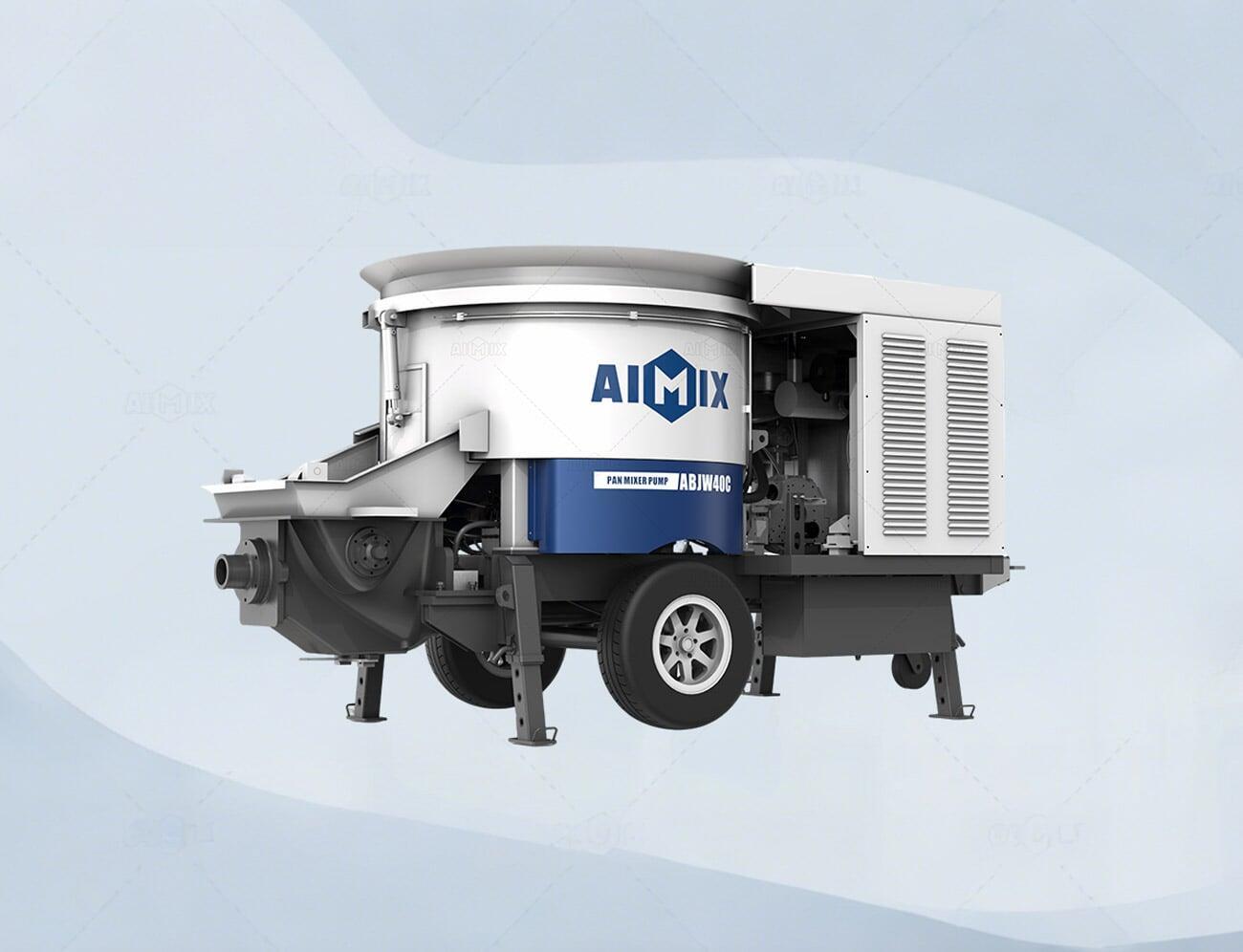
County road contracts frequently involve relatively modest concrete volumes distributed across multiple work fronts. Examples include roadside drains, culvert headwalls, pedestrian crossings, and small retaining structures. A concrete mixer pump in Kenya combines concrete mixing and pumping functions in one machine. This configuration can be useful where ready-mixed concrete deliveries are impractical and the contractor needs to prepare and place concrete at the work site. The main financial consideration is the balance between integrated functionality and production capacity. Contractors should check whether the mixing output and pumping rate can meet the daily work plan, particularly when several teams depend on the same machine. An integrated unit may reduce the need for separate mixing and pumping equipment, but its suitability depends on aggregate supply, water availability, batching accuracy, and the required concrete specification.
Trailer Pumps for Larger or More Continuous Concrete Placement
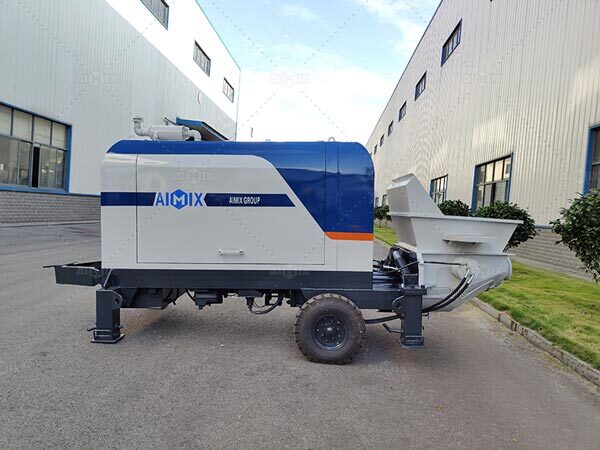
A concrete trailer pump in Kenya can be suitable for contractors handling larger concrete volumes or pumping through pipelines to locations that are difficult to reach directly. Typical applications include bridge components, substantial culvert structures, and longer sections of concrete drainage works. Trailer pumps generally require a separate concrete mixing and supply arrangement. Consequently, the equipment budget should include the batching or mixing system, aggregate handling, water supply, pipeline accessories, and the transport vehicle or towing arrangement where necessary. For projects with frequent moves between work fronts, contractors should also estimate setup time, pipeline installation, cleaning, and equipment relocation. These activities affect daily productivity even when the pump's rated capacity appears sufficient.
How to Calculate the Total Cost of Owning a Concrete Pump
Separate Initial Investment from Operating Expenses
A practical equipment budget should distinguish one-time expenditure from recurring costs. The initial investment may include: - Equipment purchase price. - International freight and insurance. - Import charges, applicable taxes, and customs clearance. - Inland delivery, commissioning, and operator training. - Initial pipeline, clamps, hoses, and essential spare parts. Recurring expenses may include diesel, lubricants, routine maintenance, wear parts, operator wages, equipment transport, and cleaning. Contractors should also account for downtime and depreciation when calculating the machine's economic contribution to the contract.
Calculate the Cost per Cubic Metre of Concrete Pumped
The cost per cubic metre provides a useful comparison between equipment options. The calculation should use realistic output rather than the maximum rated capacity. For example, consider an illustrative project budget with the following assumptions:
| Cost item | Illustrative amount |
|---|---|
| Equipment acquisition and delivery | KSh 5,000,000 |
| Expected productive life | 5 years |
| Annual pumped volume | 12,000 m³ |
| Annual operating expenses | KSh 1,800,000 |
Assuming a straight-line allocation of the initial investment over five years, annual capital allocation would be KSh 1,000,000. Adding annual operating expenses gives KSh 2,800,000 in annual equipment-related costs. At 12,000 m³ per year, the indicative cost is approximately KSh 233 per m³. This is a simplified budgeting example, not a current market quotation. It excludes financing costs, residual value, taxes not already accounted for, and other project-specific expenses. Actual figures should be calculated from supplier quotations and operating records.
Assessing Equipment Utilization Across Multiple Contracts
Estimate Productive Days Rather Than Calendar Days
A pump may remain on the contractor's books for an entire year without working every day. County road projects can be affected by weather, delayed material deliveries, site handovers, payment schedules, and the movement of crews between locations. A realistic utilization estimate should account for working days, setup time, maintenance, and idle periods. Higher annual utilization spreads the initial investment across more cubic metres of concrete, potentially lowering the equipment cost per unit of output. However, contractors should not assume that every available hour generates revenue. Pumping time must be coordinated with concrete supply and the pace of placing and finishing crews.
Compare Ownership with Equipment Rental
Buying a concrete mixer with pump for sale may suit contractors with recurring concrete work across several contracts. Rental can be more appropriate when pumping requirements are occasional, project durations are short, or the contract does not justify a substantial capital commitment. The comparison should include rental charges, mobilization, fuel, operator costs, minimum hire periods, and responsibility for maintenance. For ownership, include financing, depreciation, storage, repairs, and the expected resale value. The relevant question is not simply which option has the lower headline price. It is which arrangement produces an acceptable total cost for the contractor's expected workload.
Final Checklist Before Purchasing a Mobile Concrete Pump
Before committing to a purchase for a Kenyan county road contract, verify the following: - Required concrete volume per day and per project. - Suitable pumping capacity and concrete mix compatibility. - Number of work fronts and frequency of relocation. - Full landed cost, including importation and inland delivery. - Availability of technical support, spare parts, and trained operators. - Expected annual utilization and cost per cubic metre. - Contract payment terms and available working capital.
Conclusion
Calculating mobile concrete pump costs for county road contracts in Kenya requires a broader view than comparing supplier quotations. Pumping capacity, transport, import charges, operating expenses, and equipment utilization all influence the final cost of delivering concrete. By matching the pump configuration to the project's concrete volume and working conditions, contractors can build a more reliable equipment budget. The strongest purchasing decision is based on realistic productivity, transparent landed costs, and the machine's expected contribution across current and future contracts.