Continuous concrete pours require more than a high-capacity concrete pump. The production rate, delivery interval, concrete consistency, pumping distance, pipeline arrangement, and placement sequence must operate as one coordinated system. For South African contractors, this coordination can be particularly important on large foundations, industrial floors, bridges, high-rise structures, dams, and infrastructure projects where an interruption in concrete supply can create cold joints, labor delays, or difficult finishing conditions. A reliable workflow begins before the first batch is produced: concrete demand is calculated, equipment capacity is matched, aggregate and cement supplies are secured, and the pumping route is planned around the actual site. When concrete production and pumping are synchronized, each batch moves through the process with minimal interruption. The batching system supplies concrete at a rate the pump can continuously accept, while the pump maintains a controlled flow to the placement point. This creates a production-to-placement chain in which equipment capacity is considered collectively rather than independently.
How Contractors Match Concrete Production With Pumping Capacity
Calculate the Required Pouring Rate First
The starting point for continuous pouring is the required concrete placement rate. Contractors need to determine how many cubic meters must reach the formwork per hour and how long the pour is expected to continue. The required production rate should account for the concrete pump's practical output rather than its maximum theoretical capacity. Site conditions, pipeline length, concrete mix characteristics, and operating interruptions can all affect actual pumping performance. For example, if a project requires a sustained pumping rate of 40 m³/h, the batching operation should be capable of supplying concrete at a comparable or slightly higher rate. If production falls below pump demand, the pump may need to stop repeatedly. If production substantially exceeds placement capacity, trucks or freshly mixed concrete can accumulate unnecessarily.
Use Buffer Capacity to Prevent Production Interruptions
Continuous pours require a degree of operational redundancy. A batching plant should not be selected so close to the required output that minor interruptions immediately stop the pour. Raw material replenishment, aggregate loading, mixer cycles, equipment inspection, and short operational pauses can all influence production continuity. Maintaining a practical production margin gives the pumping operation more room to absorb these fluctuations.
Coordinate Mixer Cycles With Pump Demand
The batching sequence should be organized around the pump's consumption rate. Each batch needs to arrive in a predictable rhythm rather than in sporadic surges. A well-coordinated cycle can follow this sequence:
Aggregates and cement are weighed according to the mix design.
Materials are mixed to achieve the required concrete consistency.
Fresh concrete is transferred to the delivery system.
The pump receives concrete at a controlled interval.
The next batch is prepared before the current supply is exhausted.
This cadence is particularly important during large pours where stopping and restarting the pump repeatedly is undesirable.
How South African Contractors Coordinate Concrete Delivery and Pumping
Self-Loading Mixers Can Support Flexible On-Site Production
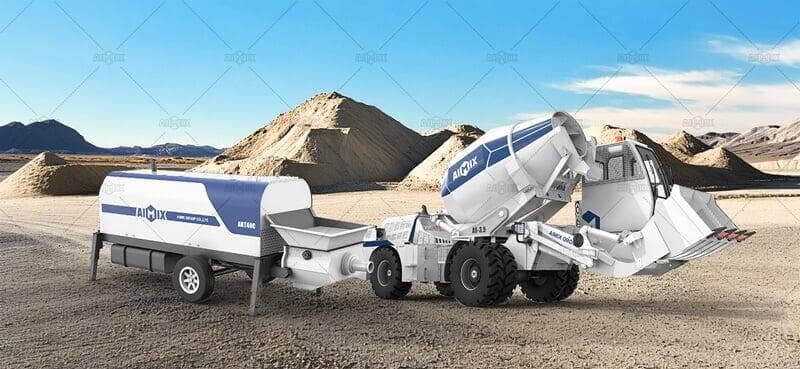
For projects where concrete must be produced close to the placement area, a self-loading mixer can combine material loading, batching functions, mixing, and transport in one mobile unit. Contractors researching a self loading concrete mixer for sale South Africa may consider this configuration when project locations are remote, concrete demand is fragmented, or conventional ready-mix delivery is difficult to coordinate. The key is synchronization. The self-loading mixer must produce and deliver concrete at a rate compatible with the pumping equipment. Its usefulness is therefore determined not only by its individual output, but by how effectively it fits into the entire concrete workflow.
Separate Pump Capacity From Actual Site Output
A concrete pump may have a substantial nominal pumping capacity, but the actual output at the placement point can be lower. Pipeline length, vertical elevation, bends, concrete characteristics, and operating conditions all influence the effective flow rate. Contractors should therefore calculate pumping requirements from the complete pipeline arrangement. A pump handling a long vertical or horizontal delivery route may require different operating parameters from one pumping concrete across a short distance. The concrete mix must also remain suitable for the planned pumping conditions.
Pipeline Layout Can Influence Continuous Flow
The delivery pipeline should be designed with the shortest practical route and an appropriate number of bends. Excessive changes in direction can increase resistance and complicate pumping. Pipeline diameter also matters. The selected diameter should correspond to the concrete mix, aggregate size, pump capacity, and required delivery distance. For large projects, pipeline supports should be installed securely and checked before the pour begins. A seemingly minor pipeline issue can interrupt an otherwise well-organized production system.
Use a Portable Concrete Pump When Site Mobility Matters
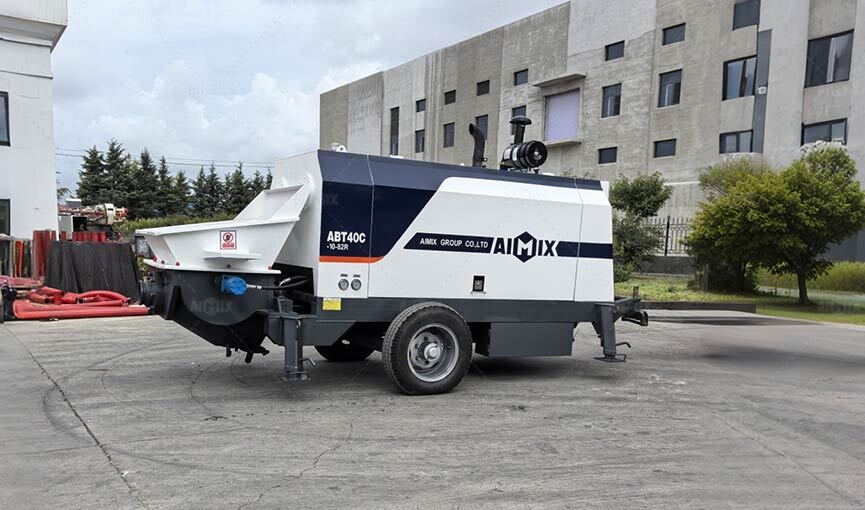
A portable concrete pump in South Africa can be useful when concrete needs to be transferred between a mobile production point and changing placement areas. This configuration can suit projects where the pumping position changes as construction progresses. The equipment can be repositioned according to the active work zone rather than being permanently tied to one location. However, mobility should be planned before production begins. Pipeline relocation, access routes, cleaning points, power or fuel requirements, and operator access all need to be considered as part of the pour sequence.
How to Maintain Continuity During Long Concrete Pours
Prepare Raw Materials Before the Pour Starts
Continuous pumping depends on continuous production. That means aggregates, cement, water, and admixtures must be available for the entire planned operation. A contractor may have sufficient batching capacity but still experience an interruption if aggregate supply or cement delivery is poorly coordinated. Stock levels should therefore be checked before the pour, with enough material available to accommodate the expected duration and a reasonable contingency margin.
Maintain Concrete Quality From First Batch to Last
Continuous pouring is not simply about maintaining volume. Every batch must remain within the specified mix requirements. Water content, aggregate proportions, cement dosage, admixture addition, and mixing time should be controlled consistently. Significant variation between batches can affect workability and pumping behavior. The first batch should therefore not be treated differently from the final batch simply because the equipment has been running for several hours.
Monitor the Pump and Production System During Operation
Operators should continuously monitor batching performance, mixer operation, pump pressure, concrete flow, and pipeline conditions. If pump pressure begins changing unexpectedly, the cause should be investigated rather than allowing the problem to develop into a full interruption. Likewise, changes in concrete consistency should be addressed before they affect downstream pumping. Preventive attention is especially valuable during large foundation pours and other operations where restarting after a prolonged stoppage may be complicated.
Plan for Equipment Redundancy and Emergency Response
Long-duration pours carry a higher exposure to equipment interruption. Contractors should establish procedures for common contingencies before concrete production begins. Depending on project scale, this may include backup pumping arrangements, spare hoses and pipeline components, additional raw-material reserves, trained operators, and clearly defined communication between the batching and placement teams. The objective is not to eliminate every possible interruption. It is to prevent a localized problem from becoming a complete production stoppage.
Coordinate the Entire Concrete Flow Rather Than Individual Machines
The most effective continuous-pour strategy treats batching, mixing, transportation, pumping, and placement as one interconnected process. For a contractor evaluating a self loader mixer in South Africa, the machine should be assessed according to its role within this system. Similarly, when comparing a concrete pump for sale in South Africa, the relevant question is not simply its advertised pumping capacity. Pipeline distance, concrete demand, production capacity, placement conditions, and expected operating duration all need to be considered together. Continuous concrete placement is ultimately a matter of synchronization. The batching system must keep pace with the pump; the pump must match the placement rate; the pipeline must suit the delivery conditions; and raw materials must remain available throughout the operation. When these elements are coordinated before the pour begins, South African contractors can establish a steadier concrete flow, reduce avoidable stoppages, and maintain greater control over demanding long-duration construction operations.