Shoplot renovations in Malaysia present a distinctive concrete-work challenge. Unlike a new construction site, a renovation project often operates within an existing commercial row where neighboring businesses remain open, access roads stay active, and the available working area is tightly constrained. Concrete may be required for floor extensions, structural modifications, drainage works, foundations, ramps, columns, beams, or rear additions, yet conventional ready-mix delivery is not always convenient. Contractors therefore have to coordinate concrete production, transport, pumping, placement, and cleanup within a narrow operational window while minimizing disruption to surrounding properties.
The practical approach is usually determined by the scale and geometry of the renovation rather than by concrete volume alone. A small shoplot may require only several cubic metres of concrete but still present difficult access conditions. The mixer truck may be unable to enter the rear area, the placing point may be several metres inside the building, or temporary structures may prevent direct discharge. Equipment selection consequently becomes a question of how to create a reliable concrete route from material supply to the final placement point.
Why Shoplot Renovations Create Difficult Concrete Workflows
Limited Access Restricts Conventional Concrete Delivery
Shoplots are commonly arranged in closely spaced commercial rows, with shared driveways, narrow service lanes, parked vehicles, pedestrian areas, and neighboring businesses surrounding the work zone. A concrete mixer truck may be able to reach the front of the property but have no practical route to the actual pouring location.
This creates a separation between concrete delivery and concrete placement. Contractors may need to discharge concrete at an accessible point and then move it through a pump or temporary pipeline. The objective is to keep vehicle movements outside the most congested part of the renovation site.
Renovation Work Often Has Irregular Concrete Demand
Unlike large new-build projects, shoplot renovations may require concrete in several discrete stages. A foundation modification can be followed by a floor pour, drainage work, structural reinforcement, or a small extension. These activities do not necessarily generate continuous demand for ready-mix trucks.
Pouring Time Must Be Coordinated With Other Trades
Concrete work can also overlap with electrical installation, masonry, plumbing, steel fixing, waterproofing, and finishing operations. Contractors therefore need to organize the pour around the actual construction sequence. A compact system that can supply concrete when required may be more practical than arranging a large delivery operation for a relatively small pour.
How Contractors Adapt Concrete Production to Restricted Sites
Small Pumping Systems Can Reach Areas Beyond Truck Access
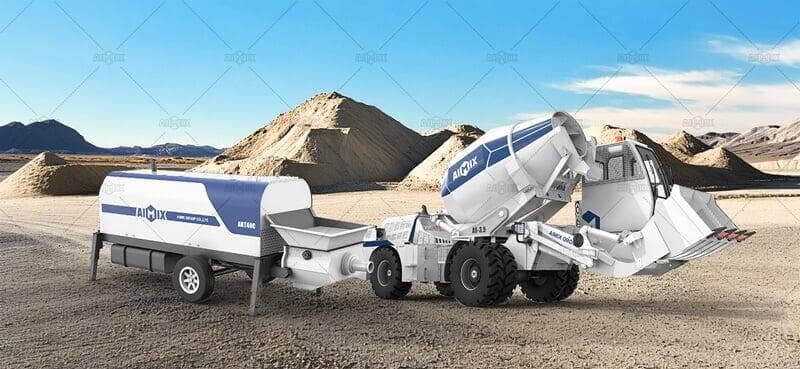
When concrete must travel from the front of a shoplot to a rear extension, interior floor, or restricted foundation area, a small concrete pump for sale in Malaysia can separate concrete delivery from final placement. The delivery vehicle can remain at an accessible location while the pump transfers concrete through a planned hose or pipeline.
This arrangement is useful where the principal constraint is not concrete volume but physical access. Before selecting the pump, contractors should assess the required horizontal distance, vertical rise, pipeline diameter, bends, concrete mix, and expected placement rate. Even a small renovation can require careful pumping design when the route contains multiple turns or elevation changes.
On-Site Mixing Can Provide More Control Over Small Pours
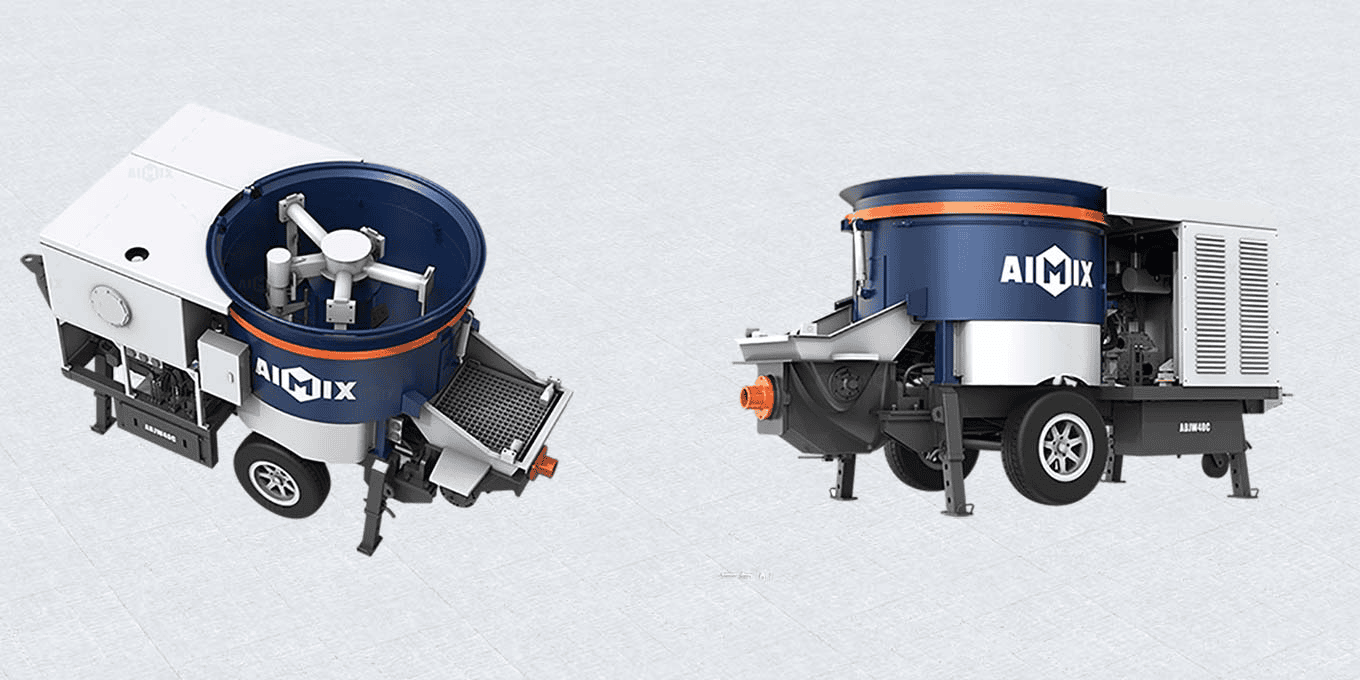
For projects where concrete demand is fragmented, on-site production can reduce dependence on fixed delivery schedules. A concrete mixing pump combines concrete preparation with pumping, allowing the contractor to produce concrete and transfer it toward the placement area within one coordinated workflow.
This can be relevant to shoplot renovations where several small pours occur at different stages. Instead of organizing separate equipment for mixing, material transfer, and pumping, an integrated arrangement can reduce the number of operational interfaces. The machine still requires adequate space for aggregate loading, operation, cleaning, and safe movement, so site layout remains a decisive consideration.
Production Capacity Should Match Actual Renovation Demand
High nominal output is not automatically advantageous for a small renovation. The appropriate capacity should correspond to the expected pour size, available workforce, placement speed, and working hours. A system that produces concrete faster than the placing crew can handle may create unnecessary congestion, while insufficient output can prolong the pour.
How Equipment Choice Changes With the Renovation Layout
Front-Facing Pouring Areas Require a Different Setup From Rear Extensions
If the concrete placement area is directly accessible from the shoplot frontage, conventional delivery may remain practical. However, rear extensions, internal floor areas, basement sections, and enclosed construction zones can require pumping. The distance between the truck and the placement point should therefore be measured rather than estimated visually.
Equipment Footprint Matters in a Working Commercial Area
Shoplot renovations rarely provide unlimited space for machinery. Contractors must consider where the equipment will stand, where aggregates will be stored, how workers will move around the machine, and whether neighboring properties require continuous access. A smaller equipment footprint can simplify site organization, but only if its production and pumping capabilities remain appropriate for the project.
Procurement Should Focus on the Complete Concrete Route
When evaluating a concrete pump for sale in Malaysia, contractors should look beyond the pump's maximum output. The more useful questions concern the actual work: Where can the machine be positioned? How far must concrete travel? What pipe or hose arrangement is required? How much concrete must be placed during each working session? How frequently will the equipment be relocated?
Planning the Pour Around the Shoplot's Daily Environment
Traffic and Neighboring Businesses Influence Equipment Positioning
A shoplot renovation does not occur in isolation. Contractors may need to preserve pedestrian access, maintain neighboring shop entrances, and avoid blocking shared roads. Concrete delivery should therefore be scheduled around site access conditions, with the discharge and pumping area positioned so that construction activity does not unnecessarily obstruct the surrounding commercial environment.
Cleaning and Relocation Should Be Included in the Work Plan
Concrete equipment requires more than a production and pumping position. Contractors also need a practical location for cleaning, hose handling, material storage, and eventual relocation. These details become especially important when the site has limited drainage or when washout must be controlled to prevent concrete residue from entering public areas.
Managing concrete during Malaysian shoplot renovations is ultimately an exercise in spatial coordination. The key question is not simply how much concrete is required, but how that concrete can move from production or delivery to the final placement point without disrupting the surrounding site. By assessing access, pouring distance, equipment footprint, production rate, working sequence, and cleanup requirements together, contractors can develop a concrete workflow suited to the compact and continually changing conditions of shoplot renovation projects.