Concrete placement becomes considerably more intricate when construction takes place beside existing buildings. Australian contractors may need to extend foundations, construct additions, repair structural slabs, install retaining structures, or develop new infrastructure within already occupied sites. Access can be narrow, overhead clearance may be restricted, and existing walls or utilities can leave little room for conventional concrete delivery. The challenge is therefore not simply producing concrete, but moving it precisely into the required location without disturbing surrounding structures or disrupting ongoing operations.
In these environments, pumping equipment provides a practical means of separating concrete production from concrete placement. A mixer truck can remain in an accessible position while concrete travels through a pipeline toward the work area. Depending on the site configuration, contractors may use a line pump, a concrete pump mobile, or other pumping equipment selected according to pumping distance, access limitations, required output, and the characteristics of the concrete mix.
Why Concrete Placement Around Existing Buildings Is Challenging
Restricted Access and Limited Working Space
Existing buildings often occupy the most convenient access routes. A new slab may need to be poured behind a building, a foundation may sit alongside an existing wall, or an extension may leave only a narrow passage for construction equipment.
Large equipment can struggle in these circumstances. Mixer trucks need sufficient turning space, while conventional concrete discharge may be impossible when the pour is separated from the truck by walls, structures, landscaping, or temporary barriers. Pumping changes the geometry of the operation by allowing concrete to travel through a hose or pipeline rather than relying on direct discharge.
Protecting Existing Structures During Construction
Concrete placement beside an occupied or structurally sensitive building requires careful control. Contractors must consider excavation effects, temporary loads, vibration, concrete pressure, and accidental contact with finished surfaces.
The pumping system should therefore be integrated into the site plan rather than positioned as an afterthought. Pipeline routes can be arranged around vulnerable areas, while the discharge point can be controlled by the placing crew. This reduces unnecessary movement of heavy equipment near existing structures.
Concrete Pumping Equipment for Confined Australian Sites
Concrete Line Pumps for Narrow or Obstructed Areas
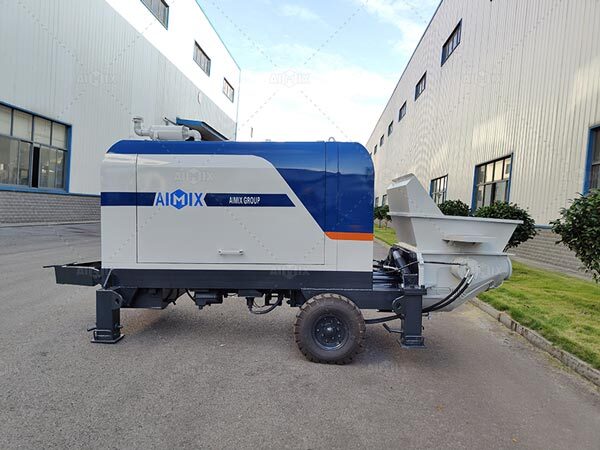
Concrete line pumps for sale Australia are particularly relevant to projects where concrete must travel horizontally or vertically through a relatively confined route. The pump can remain in a designated position while delivery lines extend toward the foundation, slab, footing, or structural addition.
This arrangement is useful for residential extensions, commercial renovations, basement works, driveway slabs, and small infrastructure upgrades. The pipeline can be routed through selected access corridors, reducing the need to position a large concrete vehicle directly beside the placement area.
Line pumping also offers a degree of spatial agility. The discharge hose can be moved by the placing crew, allowing concrete to be distributed across a work area without repeatedly repositioning the pumping unit.
Mobile Concrete Pumps for Changing Work Locations
For contractors handling multiple projects or construction zones, mobile concrete pumps for sale Australia can provide a useful combination of transportability and pumping capability. Mobility becomes especially valuable when the pump must be moved between different sections of a renovation site or deployed across several nearby projects.
A mobile configuration can shorten equipment setup time and reduce the logistical burden associated with larger permanent pumping arrangements. For smaller contractors, this flexibility can be significant because equipment utilization often depends on serving varied project types rather than one continuous high-volume pour.
When a Concrete Pump Is More Practical Than Direct Discharge
A concrete pump for sale in Australia may be considered when access limitations make conventional truck discharge inefficient or impossible. The deciding factor is not necessarily the total volume of concrete. Even a relatively modest pour can justify pumping when the placement point is inaccessible from the mixer truck.
For example, a rear extension may have an existing building between the delivery vehicle and the foundation. Instead of dismantling temporary structures or creating a wider access route, contractors can establish a pumping line and deliver concrete around the obstruction.
How Contractors Plan Concrete Placement Around Existing Structures
Pipeline Routing Comes Before the Concrete Pour
Pipeline planning is one of the most important aspects of confined-site concrete placement. Contractors must identify the shortest practical route while avoiding doors, windows, finished surfaces, electrical services, scaffolding, and other obstructions.
Bends should be minimized where practical because changes in direction can increase resistance within the pipeline. The crew also needs adequate support for the line, particularly where the hose crosses uneven ground or passes through elevated sections.
Concrete Mix Consistency Must Match the Pumping System
Pumping performance depends heavily on concrete workability and mixture consistency. A mixture that is too stiff can increase pumping resistance, while excessive water addition can compromise the designed concrete properties.
For this reason, aggregate grading, cement content, admixture selection, and water control should be established before pumping begins. Consistency matters throughout the pour. Significant variation between batches can create changes in pumping behavior and complicate placement.
Pour Sequencing Reduces Disruption
Concrete placement around existing buildings is usually organized into manageable sections. Contractors may divide a large slab into pour zones or establish a sequence that keeps access routes available for workers and equipment.
This approach is particularly important at occupied commercial properties. A carefully sequenced pour can reduce interference with entrances, loading areas, parking spaces, and essential services. The objective is to maintain a controlled construction footprint rather than allow concrete operations to expand unpredictably across the site.
Choosing the Right Pump for Australian Infill and Renovation Projects
Consider Distance, Height, and Access
Pump selection should begin with the actual placement geometry. Horizontal distance, vertical rise, pipeline diameter, concrete output, and the number of bends all influence pumping requirements.
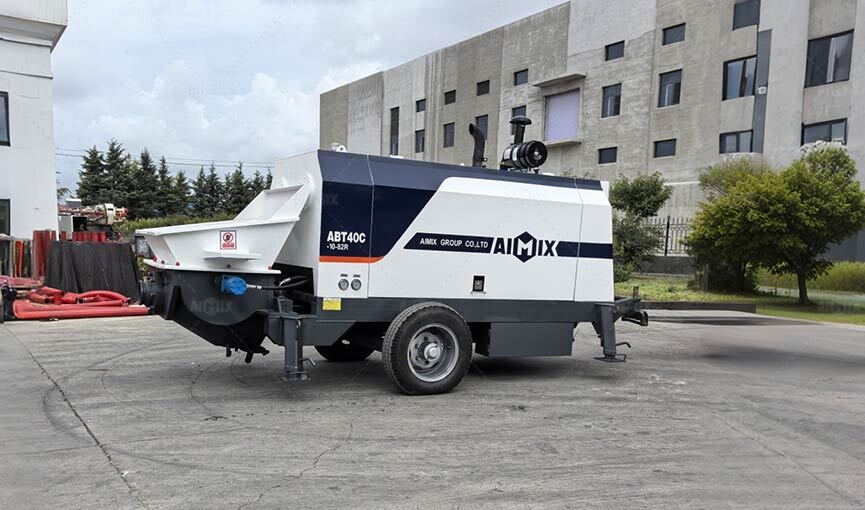
A compact line pump may be sufficient for a small extension, whereas a more capable mobile pumping unit may be appropriate when concrete must reach elevated slabs or more distant construction zones. Selecting capacity based only on nominal output can be misleading if the site geometry creates substantial pumping resistance.
Match Equipment to Project Scale and Frequency
For contractors completing occasional small pours, hiring may be more economical than ownership. However, companies undertaking recurring renovation, civil, or infill projects may evaluate a concrete pump for sale in Australia based on long-term utilization rather than the cost of a single project.
The same principle applies to concrete line pump for sale Australia and mobile concrete pumps for sale Australia. The appropriate machine is the one that fits the contractor's typical access conditions, project volume, transport requirements, and pumping distances.
Concrete placement around existing buildings is ultimately a problem of controlled access and precise material delivery. By separating the concrete truck from the actual placement point, pumping equipment can help contractors work within narrow corridors, around structural obstacles, and beside occupied buildings. Line pumps provide particular flexibility for confined routes, while mobile pumping equipment offers greater relocation capability. With appropriate pipeline planning, concrete mix control, and pour sequencing, contractors can execute demanding infill and renovation work without turning limited site access into a major construction bottleneck.
```