Construction projects in Ghana often face unique challenges, including scattered project locations, limited access roads, transportation constraints, and the need for flexible concrete production solutions. For foundation works, rural infrastructure, residential developments, and small-to-medium construction projects, traditional concrete supply methods can create unnecessary steps between raw material preparation and final placement. A self loading concrete mixer for sale in Ghana changes this workflow by combining material loading, weighing, mixing, and concrete transportation into one integrated machine. Instead of depending on multiple pieces of equipment and separate transportation arrangements, contractors can produce fresh concrete directly at the construction site and deliver it immediately to the foundation area. This streamlined approach reduces handling procedures, improves productivity, and provides greater control over concrete quality in Ghanaian construction environments.
How Self Loader Mixer Simplifies the Concrete Production Process
From Raw Materials to Fresh Concrete in One Machine
Traditional concrete production usually involves several independent stages. Sand, gravel, and cement must first be transported to a batching location or mixing area. After mixing, concrete needs to be loaded into another vehicle and transported to the pouring point. Every additional step introduces potential delays, extra labor requirements, and higher operational costs. A self loading mixer integrates these processes into a single mobile platform. The front-loading bucket collects aggregates directly from the material stockpile, while the weighing system measures materials according to the required mix ratio. After adding cement and water, the machine completes mixing inside the rotating drum and produces ready-to-use concrete. This integrated workflow creates a more compact construction cycle. Materials enter the machine as separate components and leave as finished concrete ready for placement. The transition is almost seamless, eliminating many unnecessary intermediate movements.
Reducing Concrete Transportation Dependence on Ghana Construction Sites
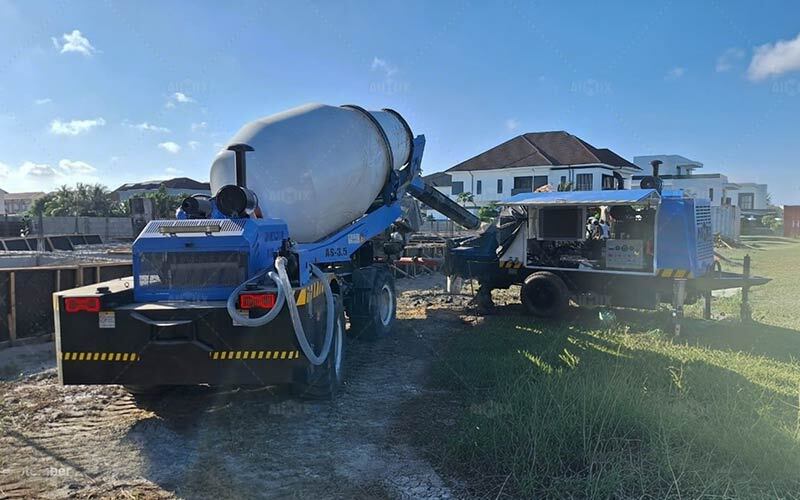
Many construction sites in Ghana are located away from commercial concrete suppliers or fixed batching plants. Remote road projects, agricultural buildings, residential foundations, and community infrastructure developments may not have convenient access to ready-mix concrete services. In these situations, concrete transportation becomes a major challenge. Long-distance delivery can increase fuel consumption, create scheduling uncertainty, and affect concrete quality due to extended waiting times before pouring. A self loader mixer minimizes this dependency by bringing the complete concrete production process directly to the job site. Contractors only need access to basic raw materials. The machine can move between different working areas and produce concrete exactly when and where it is required. This capability is particularly valuable for foundation construction, where concrete must often be poured continuously to maintain structural integrity.
Why Eliminating Extra Concrete Transportation Steps Improves Project Efficiency
Faster Foundation Construction with On-Demand Concrete Production
Foundation works require accurate timing. Excavation, reinforcement installation, formwork preparation, and concrete pouring must follow a coordinated sequence. Any delay in concrete availability can interrupt the entire construction rhythm. With a self loading cement mixer for sale, contractors can produce concrete according to real-time site requirements. There is no need to wait for external concrete trucks or coordinate multiple suppliers. Once the foundation area is prepared, fresh concrete can be delivered immediately. This on-demand production model creates operational flexibility. Small quantities can be produced for individual foundation sections, while larger volumes can be continuously supplied during intensive pouring activities. The result is a more efficient construction cycle with fewer idle periods for workers and equipment.
Lower Labor and Equipment Coordination Requirements
A conventional concrete supply chain may involve loaders, concrete mixers, transport trucks, and additional workers responsible for coordination. Managing multiple machines increases operational complexity and requires careful scheduling. A self loader mixer reduces this equipment dependency by replacing several separate operations with one multifunctional unit. One operator can manage material loading, mixing, and transportation tasks from a single machine. For contractors in Ghana, where skilled labor availability and equipment logistics can affect project budgets, this simplified approach offers practical advantages. Fewer machines mean easier management, reduced fuel consumption, and improved site organization.
Maintaining Concrete Quality from Mixing to Placement
Concrete quality depends not only on material proportions but also on timing. Once concrete is mixed, delays before placement may affect workability and performance. By producing concrete directly at the construction location, self loading mixers shorten the distance between mixing and pouring. The concrete reaches the foundation while it maintains better freshness and consistency. Advanced self loading mixers also use integrated weighing systems to improve material measurement accuracy. This helps contractors maintain stable concrete proportions even when working in areas without permanent batching facilities. For foundation applications, where strength and durability are critical, consistent concrete production provides greater confidence in the final structure.
Choosing a Self Loader Mixer for Ghana Construction Applications
Consider Project Scale, Mobility, and Concrete Demand
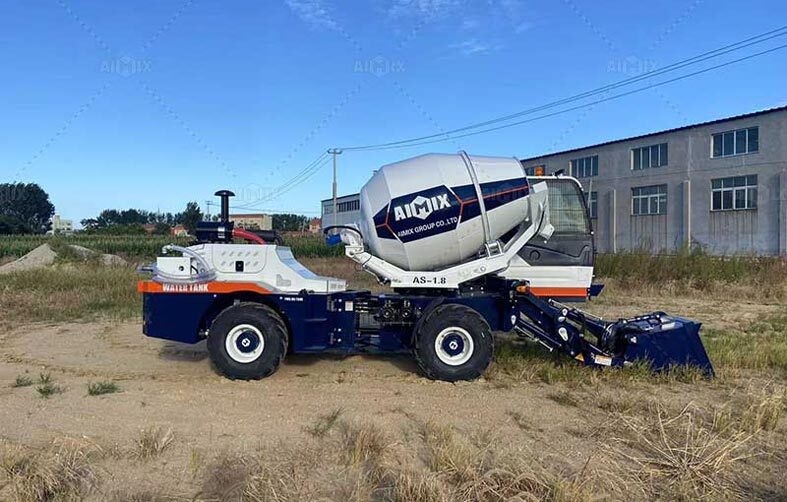
Different construction projects require different levels of concrete production capacity. A small residential foundation may require a compact machine with flexible movement, while larger infrastructure projects may need higher output and longer operating capability. When selecting a self loading mini concrete mixer machine, contractors should evaluate daily concrete demand, site accessibility, material availability, and transportation distance. Mobility is especially important in Ghana, where construction sites may vary from urban areas to remote locations. A machine that can travel independently and operate on different terrains provides greater project adaptability.
A More Efficient Future for On-Site Concrete Production
The construction industry is increasingly moving toward equipment solutions that combine flexibility, efficiency, and reduced dependence on external resources. Self loading mixers represent this shift by transforming concrete production from a fixed-location activity into a mobile construction process. For Ghana construction sites, the greatest advantage is not simply faster mixing. It is the elimination of unnecessary transportation stages between material loading and foundation filling. By integrating multiple functions into one machine, self loader mixers help contractors build more efficiently, reduce project complexity, and maintain better control over concrete supply. From the first bucket of aggregate to the final foundation pour, the entire process becomes more direct, reliable, and adaptable.