The calculus of capital equipment acquisition in the aggregates industry has long been dominated by a singular assumption: stationary plants deliver superior economics. For generations, quarry operators have anchored their crushing circuits to fixed foundations, believing that the efficiency gains of permanent installations outweighed any flexibility benefits. That assumption is now being rigorously tested—and frequently overturned—by the evolving realities of limestone crushing. The mobile jaw crusher, once viewed as a niche solution for small contractors, has matured into a strategic asset capable of delivering compelling returns across a widening array of applications. Its value proposition extends far beyond the obvious convenience of being able to move between sites. The true ROI of mobility manifests in reduced material handling costs, accelerated project timelines, and the ability to monetize deposits that would otherwise remain economically inaccessible. For the operator facing fragmented reserves, short-term quarry leases, or the growing complexity of urban-adjacent extraction, the question is no longer whether a mobile jaw crusher can match stationary performance, but whether the stationary approach can justify its own inherent rigidity against the adaptable economics of mobility.
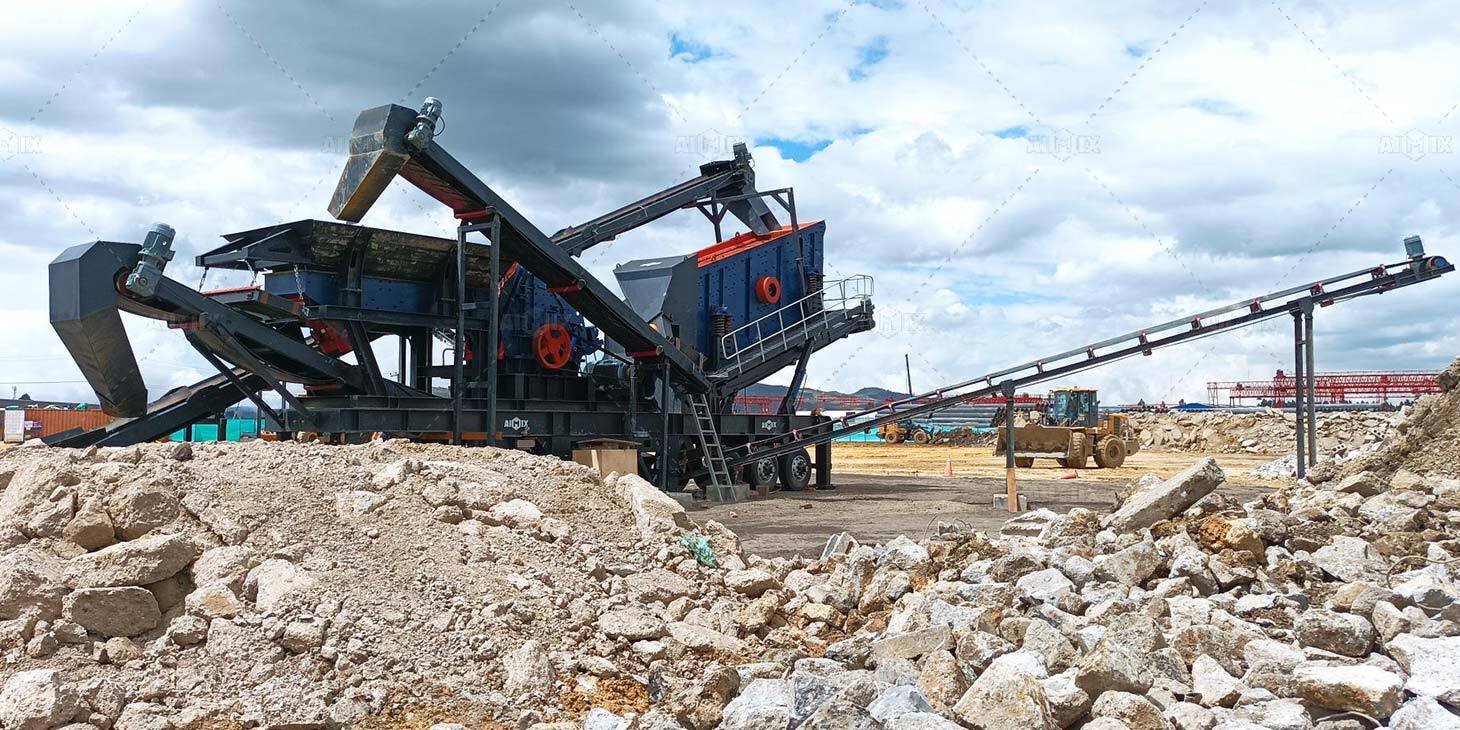
Eliminating Haulage Costs and Reclaiming the Value of In-Site Crushing
The most immediate and quantifiable return from mobile crushing lies in the dramatic reduction of material transport expenses. In a conventional stationary configuration, blasted limestone must be loaded onto haul trucks and transported—sometimes over considerable distances—from the quarry face to the fixed primary crusher. Each kilometer traveled represents fuel burned, tire wear incurred, and productive time lost to non-value-adding movement. A mobile jaw crusher positioned directly at the working face inverts this logistics model. The excavator or wheel loader that extracts the material places it directly into the limestone crusher’s hopper, and the crushed product emerges ready for screening or stockpiling. This consolidation of operations eliminates an entire fleet of haul trucks and the labor required to operate them. For operations where the extraction point migrates over time—as it inevitably does in any quarry—the mobile unit moves in lockstep with the face, maintaining optimal proximity throughout the deposit’s life. The savings in haulage alone frequently justify the premium of mobile equipment within the first twelve to eighteen months of operation, after which every subsequent month accrues directly to the bottom line.
Accelerating Project Timelines Through Rapid Deployment and Reduced Civil Works
Beyond operational efficiency, the mobile jaw crusher delivers ROI through compressed project schedules that stationary plants cannot replicate. Commissioning a fixed crushing installation requires months of civil engineering: foundations must be poured, conveyors erected, and electrical systems hardwired. Each phase introduces opportunities for delay—weather interruptions, subcontractor availability, unforeseen geotechnical conditions. A mobile crusher plant for sale arrives on a lowboy trailer and, within days, is producing material. This speed of deployment translates directly to earlier revenue generation. For contract crushing scenarios, where operations are tied to finite project durations, the ability to mobilize quickly, crush aggressively, and demobilize cleanly allows contractors to pursue a higher volume of projects annually. Furthermore, the reduced civil footprint of mobile equipment eliminates end-of-project restoration costs. When the reserve is exhausted or the contract concludes, the aggregate crusher simply loads onto a truck and departs, leaving no permanent foundations to remove, no electrical infrastructure to decommission, no environmental remediation obligations tied to abandoned concrete pads. This inherent reversibility carries both financial and regulatory advantages that stationary plants cannot match.
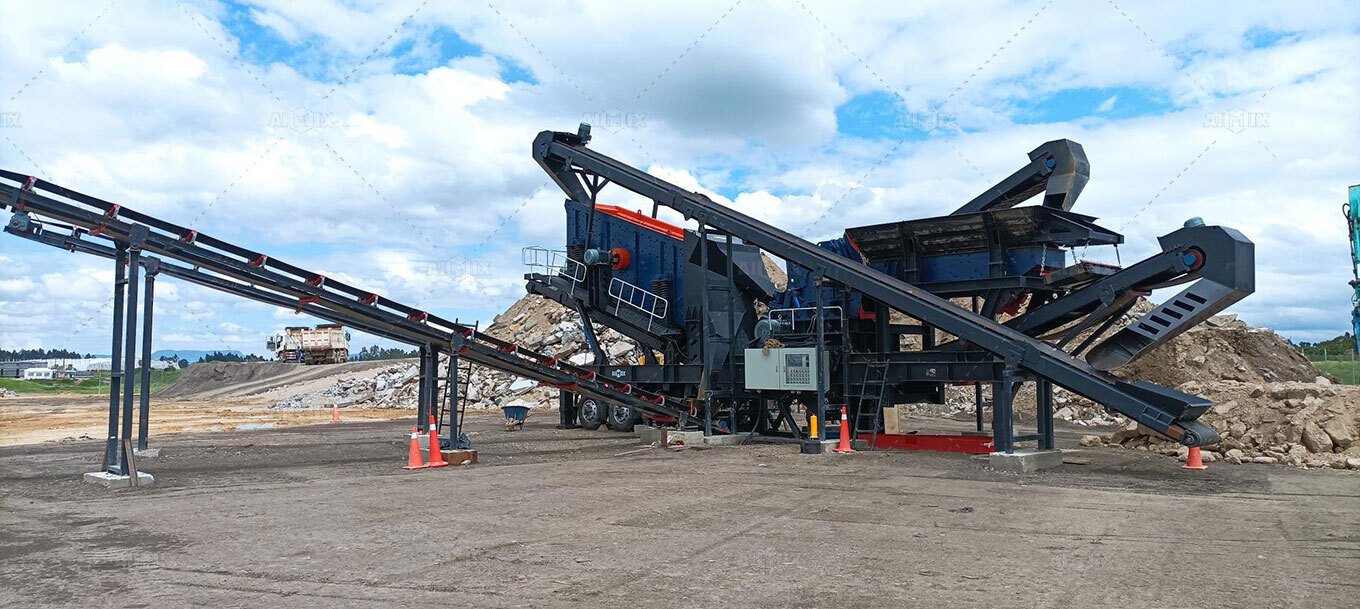
Unlocking Marginal Deposits and Adapting to Deposit Variability
The final dimension of mobility’s ROI lies in its capacity to transform previously uneconomic limestone deposits into profitable ventures. Small or fragmented reserves, deposits located in environmentally sensitive areas, and sites with constrained access have historically remained undeveloped because the capital required for a stationary plant could never be amortized across the available tonnage. A mobile jaw crusher changes this equation entirely. Its ability to process material on-site, coupled with lower capital thresholds and the flexibility to relocate once a deposit is exhausted, makes previously marginal projects viable. This capability is particularly valuable in markets where aggregate sources are increasingly remote from consumption centers and transportation costs dominate delivered pricing. By crushing at the deposit, operators capture the value that would otherwise be consumed by trucking. Additionally, as limestone deposits naturally vary in hardness, silica content, and fracture characteristics, mobile units allow operators to match equipment to specific zones within a quarry. A single mobile jaw crusher can service multiple extraction areas, moving as needed to address the most productive or most challenging material, whereas a stationary plant forces all material to travel to a fixed point regardless of its characteristics. This operational agility ensures that no tonnage is left behind and that every cubic meter of limestone contributes to the operation’s financial performance.