The production of high-quality granite aggregates under 10mm represents a distinct operational challenge, demanding a deliberate departure from standard crushing circuits optimized for base or coarse materials. This objective necessitates a focused approach to comminution, where each stage is meticulously configured not merely for size reduction, but for shaping the particle size distribution (PSD) curve towards a preponderance of fines. Achieving a consistent, cubical product in this specification requires more than brute force; it requires an orchestrated strategy involving specific granite crusher machine selection, precise operational parameters, and a systemic view of material flow. Inefficiency in any one segment propagates through the entire line, resulting in excessive recirculating load, premature wear, and an off-spec product that fails to meet the stringent requirements for applications such as high-strength concrete or asphalt.
The Primary Reduction Mandate: Setting the Stage for Fines Production
The initial fragmentation of raw quarry stone establishes the foundational characteristics for all subsequent stages. The objective at the primary jaw crusher is not to achieve the final product size, but to produce a consistently graded feed for the secondary circuit. A poorly set primary, yielding excessive slabby material or an uncontrolled range of sizes, will choke and inefficiently feed downstream crushers. The closed-side setting (CSS) must be optimized to create a feed stock predominantly within a manageable size range, typically under 200mm, that is conducive to further reduction. Furthermore, the geometry of the primary crushed material influences the efficiency of secondary breaking. An emphasis on achieving a more fragmented, rather than simply smaller, output from the primary stage reduces the work index for subsequent crushers, directly lowering energy consumption and wear part costs per ton of final sub-10mm product.
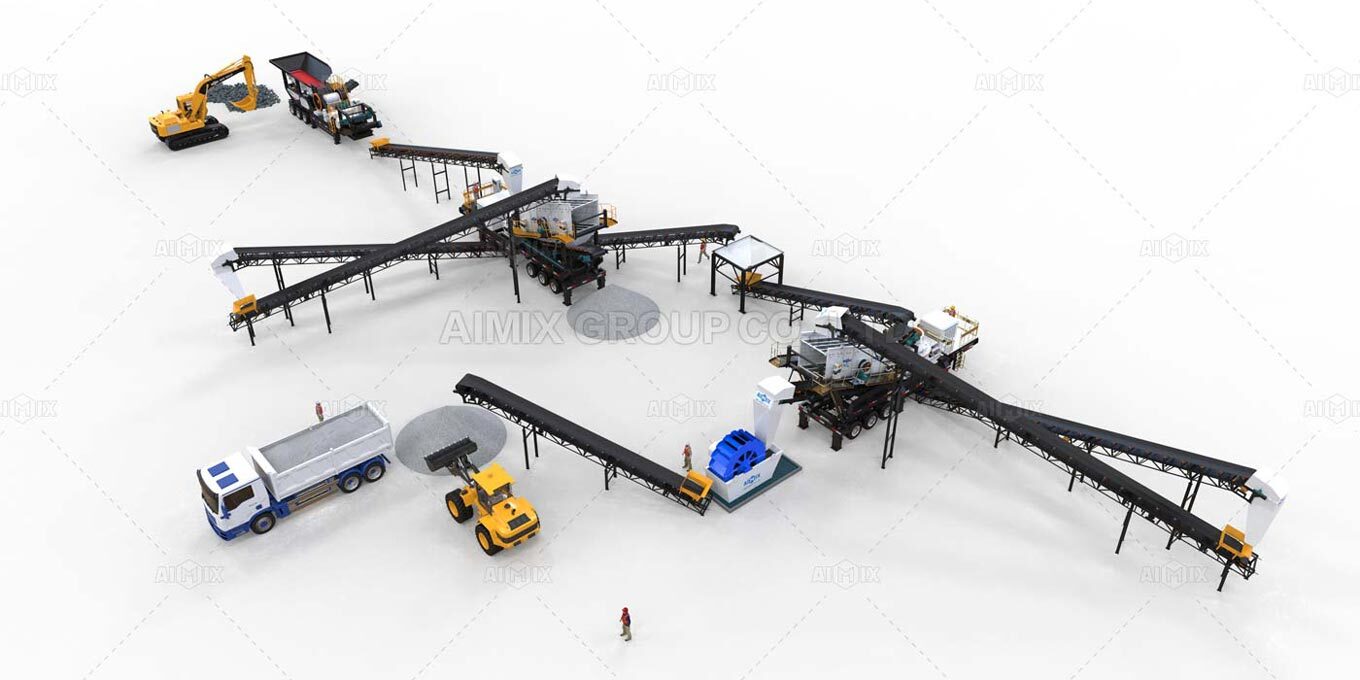
The Secondary Crusher Selection: The Pivotal Role of the Cone Crusher
For granite, a hard and abrasive material, the secondary crushing stage is the critical linchpin for producing the base feedstock for fines generation. A well-configured cone crusher is non-negotiable. The selection must prioritize a model designed for fine settings and equipped with a fine crushing chamber profile. The stone crusher machine's CSS is the primary control variable. For sub-10mm aggregate production, the CSS will be set aggressively tight, often in the range of 10-16mm, to force a higher percentage of the output into the desired size bracket. This setting, combined with a high speed and appropriate stroke, promotes inter-particle crushing within the chamber, a key mechanism for generating fines. It is imperative to pair this with a robust liner material specification to withstand the increased wear from the tight setting and abrasive granite. The secondary cone’s role is to maximize the yield of material already in the target range while preparing the remainder for the final stages.
The Tertiary and Quaternary Imperative: Vertical Shaft Impactors and Grinding Paths
To consistently achieve a high yield of material under 10mm, and particularly under 5mm, most granite operations require a dedicated tertiary stage. This is the domain of the Vertical Shaft Impactor (VSI). The VSI operates on the principle of rock-on-rock or rock-on-anvil impact crushing, which is exceptionally effective at shaping particles and generating fines. By feeding the VSI with the properly sized discharge from the secondary cone crusher, operators can exert precise control over the final product's shape and gradation. The rotor speed, feed rate, and cascade flow within the chamber are adjusted to maximize the production of cubical, well-graded fines. For the most stringent specifications demanding a high volume of very fine sand (e.g., 0-3mm), a quaternary stage involving a dedicated sand-making VSI or even high-pressure grinding rolls may be justified. This represents a specialized investment for markets where manufactured sand commands a premium.
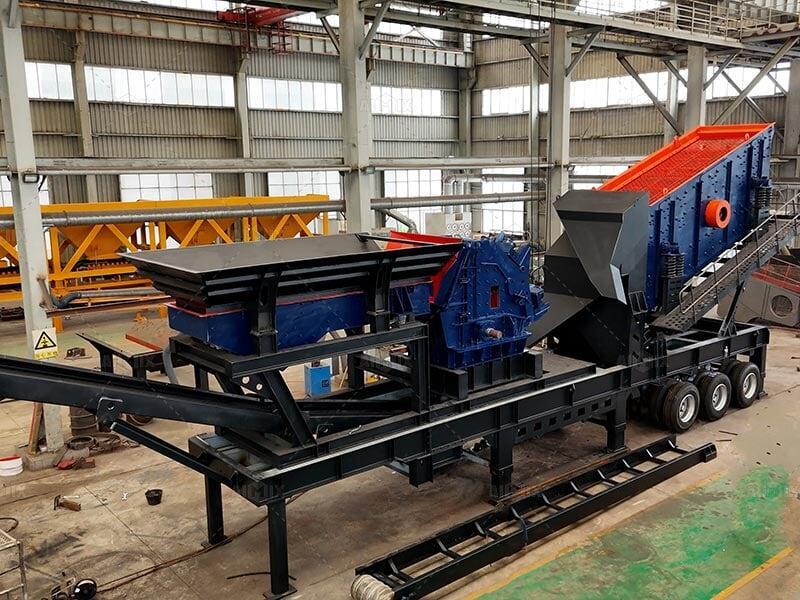
Screening and Recirculation: The Closed-Loop System for Precision Gradation
No crusher configuration can operate optimally without being governed by a precision screening circuit. Producing under-10mm aggregate is an exercise in efficient classification. Multiple-deck vibrating screens, with accurately sized mesh apertures, are deployed after each crushing stage. The objective is to immediately remove the finished product from the circuit, preventing energy-wasting over-crushing. Material that is already within the 0-10mm specification is sent directly to the product stockpile. Oversize material is systematically recirculated back to the appropriate gravel crusher machine—typically, mid-size oversize is sent back to the cone, while smaller oversize is fed to the VSI. This closed-loop design creates a self-correcting system. The screening efficiency directly determines the crusher's feed quality and the overall plant yield. Inadequate screening leads to a high recirculating load, capacity bottlenecks, and a product with hidden oversize particles. Therefore, investment in high-capacity, well-maintained screening media is as critical as the crushers themselves for achieving a profitable and precise sub-10mm granite aggregate product.