The deployment of a mobile aggregate crusher with a nominal 200-ton-per-hour (TPH) capacity represents a significant operational commitment, transforming a raw feed stockpile into a stream of specification aggregate. The machine’s mobility belies its complexity; it is a complete, high-throughput processing plant integrated onto a single tracked or wheeled chassis. Success hinges not on the crusher’s theoretical capability, but on the meticulous engineering of its setup, a deep understanding of its technical specifications, and the disciplined implementation of on-site operational protocols. A 200 TPH unit, often featuring a primary jaw crusher coupled with a secondary cone or impact crusher in a closed circuit with sizing screens, demands a systematic approach. This process begins long before the machine is powered on, with a forensic analysis of the worksite and culminates in a sustained production rhythm governed by data, vigilance, and procedural rigor.
Pre-Mobilization and Site Setup Engineering
The foundation for productive and safe operation is established during the pre-mobilization phase. This begins with a comprehensive geotechnical and logistical site analysis. The primary objective is to identify a stable, level setup area with adequate bearing capacity to support the aggregate crusher’s significant weight, often exceeding 50 tons. The analysis must also plan the material flow: the location of the raw feed (ROM) stockpile, the crusher itself, and the product stockpiles to minimize double-handling. Critical attention must be paid to egress and ingress routes for haul trucks delivering feed and removing finished product; these routes must be well-compacted, graded for drainage, and of sufficient width. Furthermore, the setup must account for utility provisioning, particularly a reliable and adequately sized power source for electric-driven units, or secure and accessible refueling points for diesel-hydraulic models.
Strategic equipment positioning is a multi-variable optimization problem. The crusher should be oriented to minimize conveyor lengths and transfer points while ensuring operator visibility of key processes, typically the feeder and jaw crusher intake. The setup must incorporate effective dust and noise mitigation from the outset. This involves positioning the unit with consideration for prevailing winds relative to sensitive receptors, and planning for the deployment of water spray or misting systems at key transfer points. Equally important is planning for maintenance clearances around the engine compartment, crusher cavities, and screen decks to facilitate safe and efficient servicing. The electrical distribution panel, if present, requires a secure, clean, and accessible location. This preparatory stage transforms a generic site into a configured production node, where every movement of material and personnel is anticipated and facilitated, setting the stage for efficient throughput.
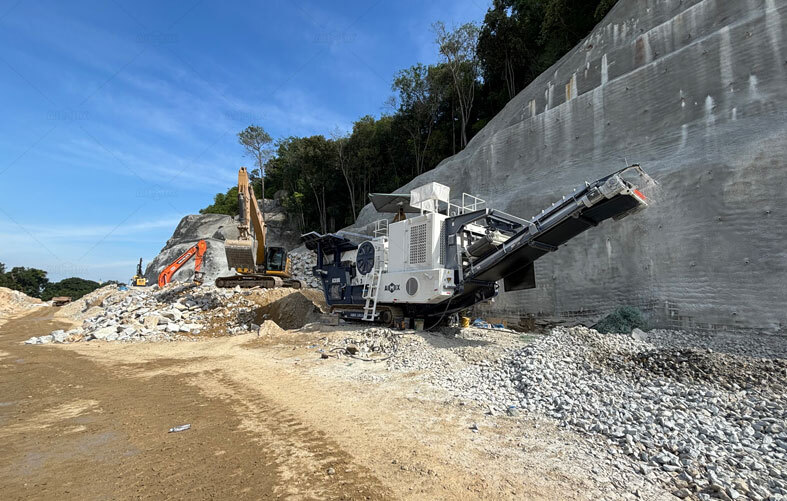
Technical Specifications and Operational Parameters
Understanding the machine’s technical envelope is paramount for extracting its designed performance. The powerplant specification—whether a Tier 4 Final diesel engine or a high-voltage electric motor—dictates the available energy for crushing and conveying. Operators must be fluent with the crushing chamber profiles of the primary and secondary units. A jaw crusher’s closed-side setting (CSS) is the primary determinant of product top size, while a cone crusher’s setting controls the shape and gradation of the finished product. The interplay between the vibrating grizzly feeder’s speed and stroke, the rock crusher settings, and the screen mesh sizes on the recirculating conveyor creates the material flow architecture. This system must be tuned, not assumed.
Capacity calibration is a dynamic process. The rated 200 TPH is a theoretical maximum under ideal conditions: dry, non-abrasive, well-graded feed. Real-world output is a function of feed material characteristics—hardness, abrasiveness, moisture content, and gradation. Best practice involves a gradual ramp-up. Initial production should run at a reduced feeder rate while monitoring power draw on the crusher drives and observing the load on screen decks. The goal is to find the sustainable equilibrium point where the crushing circuit is fully utilized without causing the secondary crusher or screens to become a bottleneck, and without overloading the crusher motors. Modern plants with Programmable Logic Controller (PLC) systems provide critical telemetry—amperage, pressures, temperatures—that guide this calibration. The operator’s role shifts from lever-puller to system optimizer, continuously fine-tuning feeder rates and crusher settings to maintain the target product specification while maximizing throughput within the machine’s mechanical and electrical limits.
On-Site Operational Doctrine and Sustained Best Practices
Sustained success is governed by a formal operational doctrine. The loading and crushing cycle must be orchestrated. The loading tool (excavator or wheel loader) should present a consistent, manageable feed size to the grizzly, avoiding direct dumping into the jaw crusher that can cause bridging or shock loading. The operator must maintain a choke-fed condition in the crushing chambers, particularly the jaw and cone crushers, to promote inter-particle crushing and optimal shape. This requires constant vigilance, adjusting the feeder speed to match the mobile stone crusher’s appetite as indicated by power draw and chamber level sensors. Stockpiling must be managed to prevent product segregation; radial stackers should be regularly moved to build elongated, horizontal layers of material.
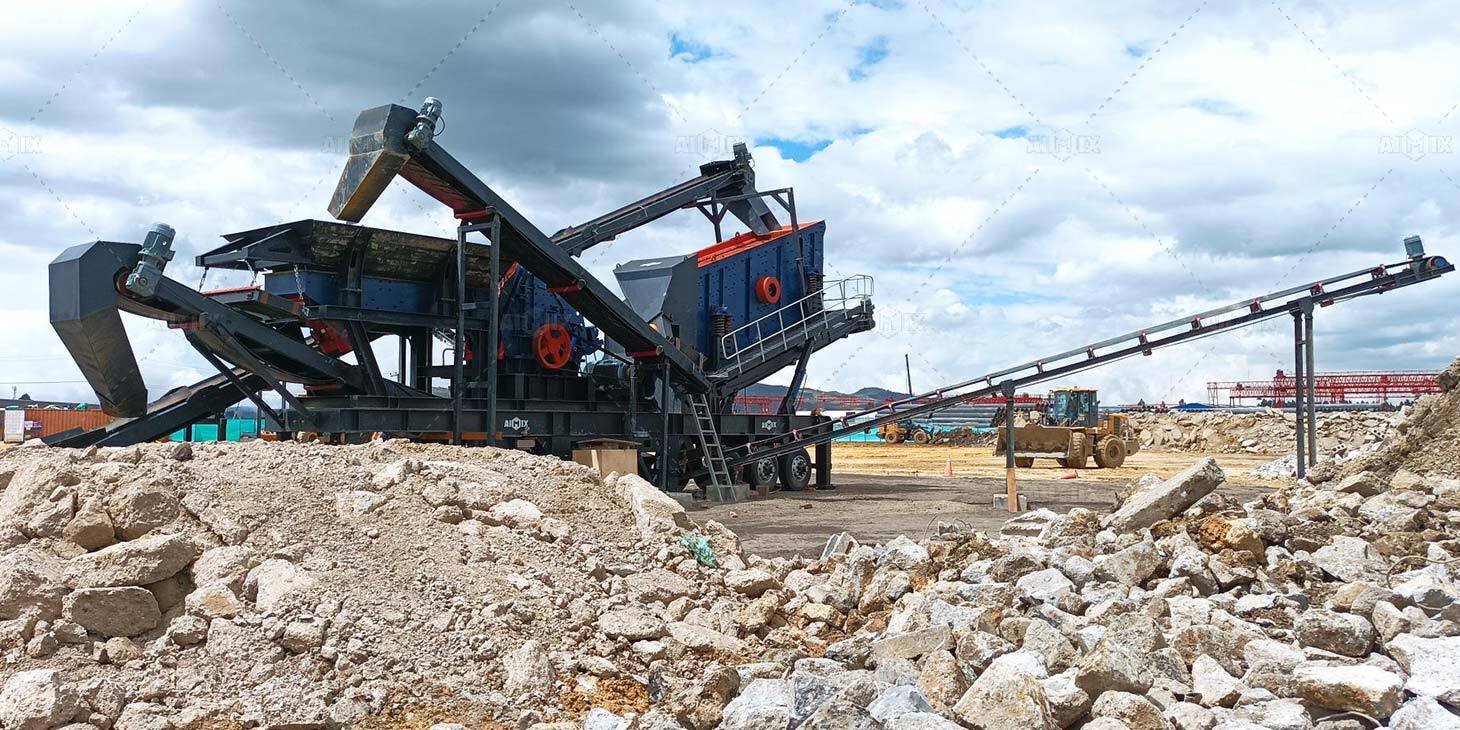
The operational doctrine is inseparably linked to a proactive maintenance regimen. This is not a reactive task list but a time-based and inspection-based protocol. Daily walk-arounds must check for loose hardware, inspect conveyor belt scrapers and skirts, verify screen tension and integrity, and monitor wear parts like jaw dies and cone liners. Lubrication schedules for crusher bearings, screen vibrators, and conveyor rollers are sacrosanct. A systematic wear parts management system, tracking hours of operation and monitoring product shape changes, allows for planned liner replacements during scheduled downtime, not catastrophic failure during production. Simultaneously, safety protocol adherence is non-negotiable. This includes lock-out/tag-out for all maintenance, ensuring guards are in place on all rotating equipment, and establishing clear communication protocols between the loader operator, crusher operator, and ground personnel. The 200 TPH mobile crusher is a production asset of immense value; its preservation and safe operation are the ultimate best practices, ensuring it delivers not just aggregate, but predictable profitability and a zero-incident worksite.