The modern 200-ton-per-hour (TPH) sand making production line has evolved beyond a mere sequence of crushing and screening plant into a sophisticated, digitally integrated materials manufacturing system. This evolution is driven by relentless market demands for precise particle shape, consistent gradation, and sustainable operation, pushing the boundaries of conventional mineral processing technology. Contemporary innovations are not incremental improvements but paradigm shifts that leverage artificial intelligence, advanced sensor fusion, and novel mechanical principles to maximize yield, minimize waste, and ensure precise specification adherence. The production of manufactured sand, a critical component in global construction, now incorporates technologies that autonomously optimize performance, recover previously lost fines, and significantly reduce the environmental footprint. These advancements transform a high-capacity sand plant from a cost center into a highly controlled, value-optimized asset.
Intelligent Process Control and Optimization
The core of the next-generation 200 TPH plant is its cognitive control system, moving far beyond simple programmable logic controller (PLC) automation. Artificial intelligence and machine learning algorithms now process real-time data streams from a network of in-line sensors to make predictive adjustments. Laser-based particle size analyzers installed on conveyor belts provide continuous, non-contact gradation feedback, allowing the control system to modulate crusher parameters and screen deck configurations in real-time to hold tight tolerances. Vibration and acoustic emission sensors on critical equipment like vertical shaft impactors (VSIs) and screens detect anomalous patterns indicative of impending mechanical failure or suboptimal wear, triggering predictive maintenance alerts long before a breakdown occurs. This shift from reactive to predictive operation drastically improves overall equipment effectiveness (OEE) by minimizing unplanned downtime in a high-throughput environment where every hour of stoppage represents significant lost production.
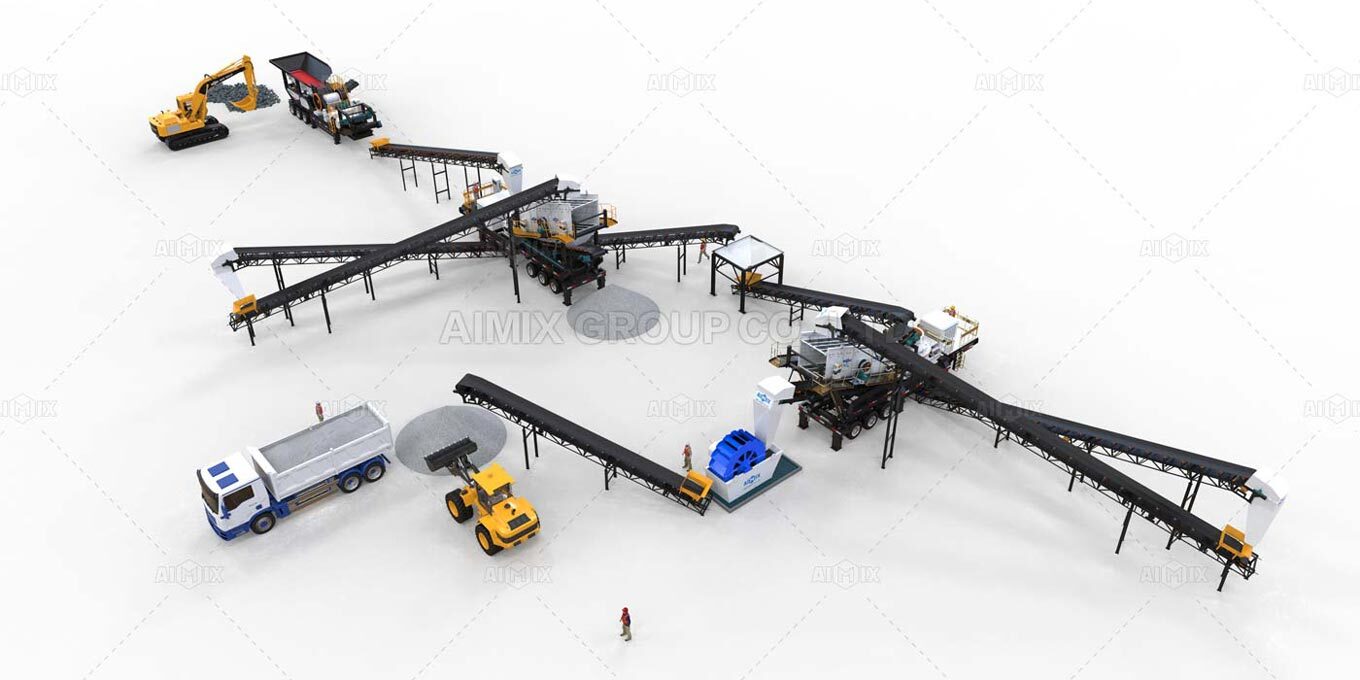
Furthermore, the implementation of digital twin technology represents a fundamental leap in process design and optimization. A dynamic, virtual replica of the entire production line—including crushers, screens, conveyors, and classifiers—is fed with live operational data. Engineers can use this digital twin to run complex simulations, testing the impact of changing feed material characteristics or adjusting machine settings without any risk to the physical plant. This allows for the pre-optimization of the circuit for a specific quarry face or ore type before a single ton is processed. The system can also perform "what-if" analyses to maximize the yield of premium, in-spec sand from a given feedstock, dynamically balancing the production of various product fractions to meet shifting market demand. This level of intelligent control ensures the 200 TPH sand making machine production line operates not just at capacity, but at peak economic efficiency.
Advanced Comminution and Classification Paradigms
Within the processing stream itself, technological innovation focuses on enhancing particle shape and classification accuracy. Traditional wet classification in cyclones is being supplanted or augmented by advanced dry air classification systems. These classifiers use precisely controlled airflows to separate particles based on their mass and aerodynamic properties, not just size. This allows for the efficient removal of deleterious, platey microfines—clay and silt particles that coat sand grains and weaken the cement bond in concrete—while preserving valuable, cubical particles in the desired product fraction. The result is a cleaner, higher-quality manufactured sand with superior particle packing density and predictable performance in concrete mixes, directly addressing a major historical criticism of crusher dust.
In the comminution stage, the pursuit of the optimal particle shape—cubical over flaky—has led to innovative circuit designs. While the VSI remains the workhorse for particle shaping, its role is now often supported by high-pressure grinding rolls (HPGRs) in a pre-crushing stage or specialized tertiary cone crushers with inter-particle crushing chambers. These hybrid circuits are engineered to induce more controlled fracture, generating a higher proportion of cubical particles with desirable surface texture. This is complemented by high-frequency, linear-motion screening decks with precisely sized polyurethane or rubber screen panels. These screens offer superior screening efficiency, especially in the critical finer sizes, reducing recirculating load and ensuring a sharp product cut. The integration of these technologies creates a synergistic effect, where each stage is optimized not just for size reduction, but for shaping and preparing the material for the next stage, culminating in a superior final product.
Sustainability and Resource Recovery Innovations
Environmental and economic imperatives have converged to drive radical innovations in resource recovery and water management. The most significant shift is the move towards completely water-free or minimal-water sand plants. Modern 200 TPH lines employ advanced dry fine recovery systems that use a combination of air classification, electrostatic separation, and vibrating dewatering screens to capture and classify particles down to 75 microns without water. This eliminates the need for large settling ponds, reduces freshwater consumption to near zero, and produces a dry, stackable fine byproduct that can be marketed for alternative applications, such as filler material. This technology is revolutionary in arid regions or where water usage permits are restrictive.
Beyond water conservation, the focus is on total resource valorization. Innovative circuits are designed to create multiple, saleable products from a single feed stream. Sophisticated sensor-based sorting technology can be employed early in the process to remove low-quality or contaminant rock. The remaining material is then processed not just for standard concrete sand, but also for plaster sand, asphalt sand, and specialized filler products. Tailings streams—historically a waste management problem—are now processed through additional stages like ultrafine grinding or magnetic separation to extract residual minerals or produce engineered fill materials. This circular economy approach transforms the 200 TPH sand plant from a linear consumer of resources into a multi-product manufacturing hub, maximizing revenue per ton of raw feed and minimizing its environmental footprint to near-neutral levels. The modern plant is not just making sand; it is responsibly and intelligently converting geological resource into a spectrum of valuable construction commodities.