The selection of a primary crusher for a granite quarry is frequently treated as a simple procurement decision, often guided by initial capital outlay or generalized production targets. This approach is fundamentally flawed and represents a significant strategic misstep. Granite is not a monolithic entity; it is a complex and variable igneous rock whose specific properties dictate the only viable path for efficient comminution. Treating all granite deposits as identical inevitably leads to a cascade of operational failures, including catastrophic wear, unplanned downtime, and an unsatisfactory final product gradation. The assertion that any robust granite crusher machine can process granite is a dangerous oversimplification. A truly optimal selection demands a rigorous, pre-emptive evaluation of the raw granite's intrinsic characteristics, transforming the crusher from a generic piece of equipment into a precision tool engineered for a specific geological reality.
The Foundational Imperative: Why Generic Crusher Selection is a Costly Fallacy
Choosing a crusher without a deep understanding of the material it must process is akin to prescribing medicine without a diagnosis. The mechanical forces applied by a jaw crusher, a cone crusher, and an impact crusher are fundamentally different, and each interacts with rock properties in a unique way. Ignoring this interplay guarantees suboptimal performance. The consequences of this incompatibility are severe and multifaceted. An abrasive granite will rapidly degrade crusher components not designed for such punishment, leading to exorbitant maintenance costs and frequent production halts. A crusher that applies the wrong type of force—compression versus impact—will struggle to achieve the desired fracture, resulting in poor energy efficiency, low throughput, and an excess of flaky or irregular aggregate. The initial savings from selecting a cheaper, ill-suited machine are invariably erased by these operational inefficiencies, making a property-based evaluation not just a technical recommendation, but a financial imperative.
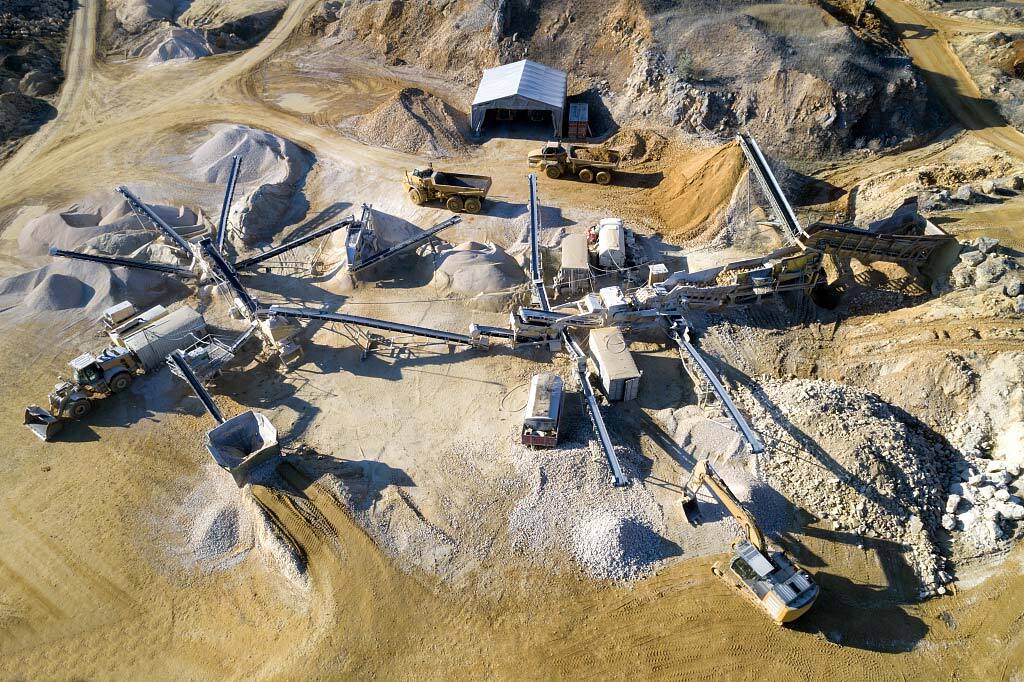
Decoding the Mineralogical Blueprint: Composition and Hardness
The first and most critical evaluation lies in understanding the granite's mineralogical composition. While granite is broadly classified as a hard rock, its constituent minerals—primarily feldspar, quartz, and mica—vary in proportion and present distinct challenges. The single most important factor is the quartz content. Quartz is exceptionally hard and profoundly abrasive. A granite with a high quartz percentage will necessitate a crusher built with premium, wear-resistant alloys and a design that minimizes sliding contact, such as a cone crusher with a packed-bed crushing action. It is crucial to differentiate between hardness (resistance to deformation) and abrasiveness (the capacity to wear away machinery). A rock can be hard but not overly abrasive, or moderately hard yet highly abrasive due to its mineralogy. This distinction directly informs the selection of liner materials and the gravel crusher's operating principle, guiding the choice towards machines engineered for longevity in the face of specific mineralogical adversaries.
The Structural Dimension: Fracture Tendencies and Feed Size
Beyond mineral content, the physical structure of the granite feed material is equally consequential. This involves an assessment of the rock's natural fracture tendencies, its tenacity, and the dimensional range of the in-situ blocks. Granite with well-defined natural cleavage planes or micro-fissures will fracture more readily under compression, making a jaw or cone crusher an efficient choice. Dense, massive granite with high tenacity may require the sharp, high-energy impact of an impact crusher to initiate and propagate cracks effectively. Furthermore, the maximum feed size the crusher must accept is not a minor specification; it is a primary design constraint. A crusher's feed opening must comfortably accommodate the largest blocks from the quarry face to prevent bridging and ensure a consistent, uninterrupted flow of material. Selecting a machine with an inadequate feed opening creates an immediate and persistent bottleneck at the very start of the processing circuit.
The Moisture and Clay Conundrum: Addressing Material Cohesiveness
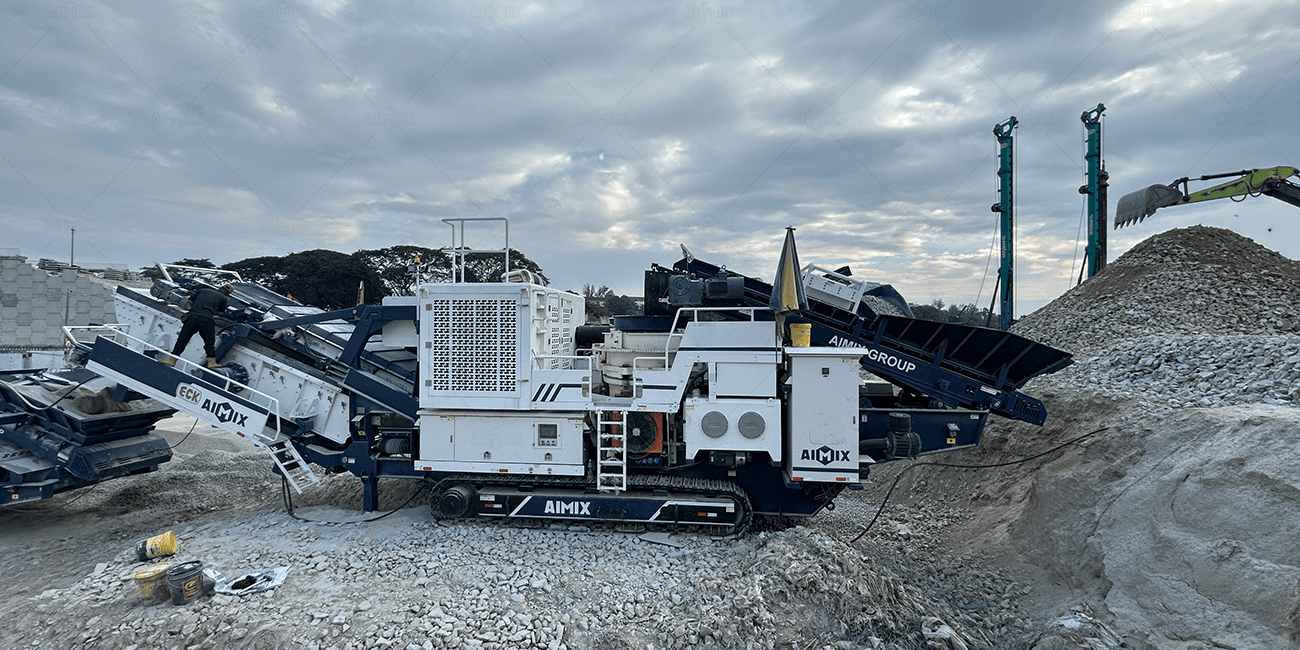
A frequently overlooked but critically important property is the material's moisture content and the presence of inherent clays or plastic fines. While granite is typically a low-moisture rock, quarry conditions and specific geological formations can introduce significant dampness. Surface moisture, when combined with fine particles, creates a cohesive mass that can adhere to crusher surfaces and choke the crushing chamber. This is particularly problematic for certain crusher types. Standard cone crushers, for example, are highly susceptible to clogging when processing wet, sticky material. In such conditions, a crusher designed with a non-choking, self-cleaning profile or an alternative technology like a primary impact crusher may be the only viable solution to maintain operational fluency and prevent the <strong>hazard of material buildup</strong> that can lead to costly and dangerous mechanical seizures.
A Synthesis for Selection: Aligning Crusher Technology with Granite Profile
The final selection process is a synthesis, a deliberate alignment of crusher technology with the comprehensive granite profile. A high-quartz, highly abrasive, blocky granite points squarely towards a robust cone crusher for sale. A less abrasive, fractured feed material might be perfectly served by a jaw crusher. A deposit with significant moisture and clay contamination may demand a primary impact crusher to ensure reliability. This decision-making process must be validated with real-world data. Whenever possible, pilot-scale crushing tests using a representative sample of the granite provide invaluable, site-specific performance metrics that no generalized chart can offer. This upfront investment in knowledge is the most effective strategy for optimizing the entire crushing circuit, ensuring that the selected crusher operates not just as a standalone unit, but as the efficient and reliable heart of a profitable operation.