The relationship between aggregate size and road performance is direct and measurable. A road built with correctly sized granite aggregate will withstand traffic loads, resist deformation, and drain properly. A road built with aggregate that is too large will have a rough surface. Aggregate that is too fine will lack structural strength. Granite, with its high compressive strength and abrasion resistance, is a premium material for road construction. However, its hardness also makes it difficult to crush. This article argues that specifying the correct output size for each layer of the road pavement is essential. It further argues that the granite crusher machine requirements—type, configuration, and wear parts—must be matched to the desired output size. The contractor or quarry operator who ignores these relationships will produce aggregate that fails specification, leading to rejected loads, project delays, and financial penalties.
Granite Output Size Specifications for Road Layers
Sub-Base Layer: 0-50mm or 0-75mm
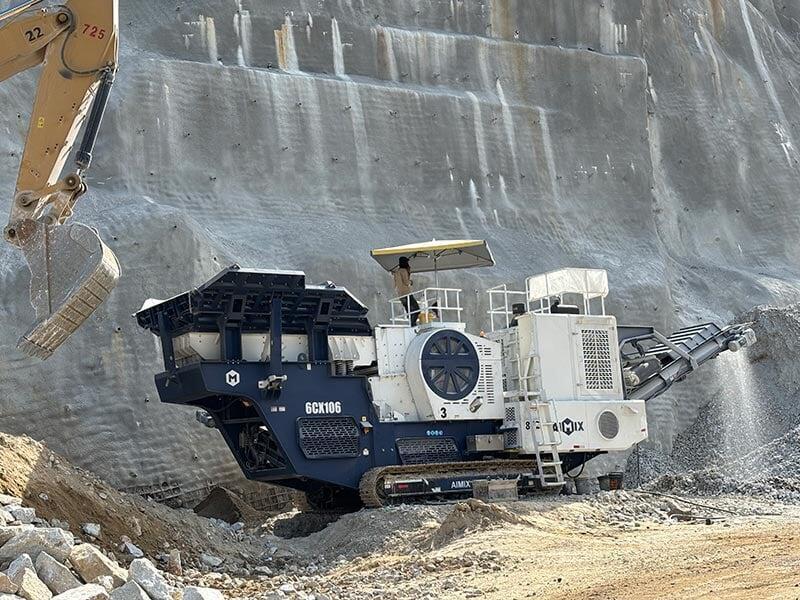
The sub-base is the lowest layer of the road pavement. It sits on the prepared subgrade. Its function is to distribute loads and provide drainage. The aggregate for sub-base is typically 0-50mm or 0-75mm, meaning the maximum particle size is 50 or 75 millimetres. The material must be well-graded, with a balanced distribution of sizes from fine to coarse. A gap-graded material—missing intermediate sizes—will not compact properly. Granite for sub-base is typically produced using a jaw crusher for primary reduction, followed by a cone crusher for secondary reduction. The cone crusher setting should be adjusted to produce a maximum particle size of 50 or 75 millimetres. A closed-circuit configuration with a screen ensures that oversize material is returned to the crusher. The argument is that sub-base aggregate does not require a cubical particle shape. Flaky particles are acceptable. This allows the use of a jaw-cone circuit, which is more economical than an impactor circuit for hard granite.
Base Course: 0-37.5mm or 0-25mm
The base course sits above the sub-base. It is the primary structural layer. Aggregate specifications for base course are tighter. Maximum particle sizes of 37.5mm or 25mm are common. The material must be well-graded and have a lower percentage of fines than sub-base aggregate. Particle shape becomes more important. Flaky particles can align in layers, reducing structural strength. The argument is that for base course, a vertical shaft impactor (VSI) may be required to improve particle shape, especially if the specification includes a flakiness index limit. A VSI is expensive to purchase and operate. Its wear parts consume quickly on hard granite. The contractor must weigh the cost of the VSI against the value of producing specification-grade base course. For some contracts, the VSI is essential. For others, a well-configured cone crusher for sale may produce acceptable shape.
Surface Course: 0-19mm or 0-12.5mm
The surface course is the top layer. It must be smooth, durable, and resistant to wear. Aggregate specifications are stringent. Maximum particle sizes of 19mm or 12.5mm are typical. The material must be cubical, with a flakiness index typically below 15 percent. Fines content must be low, often below 5 percent. Producing surface course aggregate from granite is a multi-stage process. A jaw crusher reduces the rock to a manageable size. A cone crusher produces the intermediate product. A VSI shapes the particles. A washing system removes fines. The argument is that surface course aggregate commands the highest price. It also requires the most sophisticated crushing circuit. A contractor who cannot produce surface course aggregate may still have a viable business producing sub-base and base course. A contractor who can produce all three layers has a competitive advantage.
Crusher Machine Requirements by Output Size
Primary Crushing: Jaw Crusher for All Sizes
The primary crusher receives the largest granite blocks, typically up to 600mm. A jaw crusher is the standard choice. It is simple, reliable, and tolerant of oversize feed. The jaw crusher setting determines the maximum output size. For sub-base aggregate with a 75mm maximum, the jaw crusher closed side setting should be 80-100mm. For surface course aggregate, the jaw crusher setting can be wider, because secondary and tertiary crushers will reduce the material further. The argument is that the primary crusher should not be set too tightly. A tight setting produces more fines and increases wear. A wider setting allows the secondary crusher to work more efficiently. The optimal setting balances throughput, wear, and downstream capacity.
Secondary Crushing: Cone Crusher for Intermediate Sizes
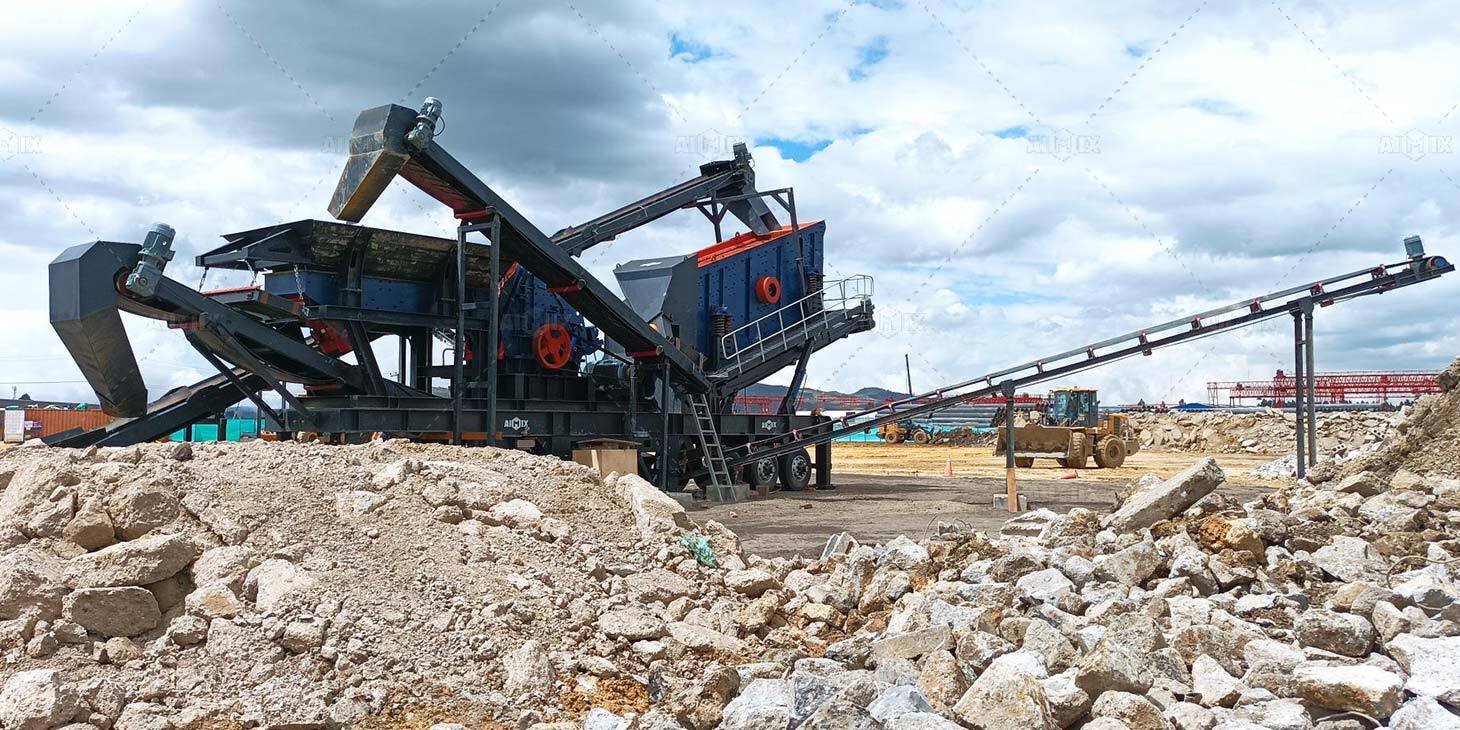
The secondary crusher reduces the material from the jaw crusher to the sizes required for the base and surface course. A cone crusher is the standard choice for granite. It is efficient and produces a reasonably cubical product. The cone crusher setting is adjusted to produce the desired maximum particle size. For a 37.5mm base course, the cone crusher closed side setting should be 35-40mm. For a 19mm surface course, the setting should be 18-22mm. The argument is that multiple cone crushers in series may be required for fine sizes. A two-stage cone circuit—a standard cone followed by a short-head cone—can produce 19mm material from 75mm feed. The investment in a second cone crusher is significant. The alternative is a single cone crusher in closed circuit with a screen. The screen returns oversize material to the cone. This configuration is less expensive but has lower throughput. The choice depends on the required production volume.
Tertiary Crushing: VSI for Cubical Shape
A vertical shaft impactor is required for surface course aggregate that must meet a flakiness index specification. The VSI uses a high-speed rotor to throw rock against a rock-lined chamber. The rock-on-rock action fractures particles along natural cleavage planes, producing cubical shapes. The VSI also reduces the material to the final size. A VSI can produce 12.5mm aggregate from 19mm feed in a single pass. The argument is that the VSI is expensive to operate. The rotor and wear parts are consumables. On hard granite, a set of rotor tips may last only 200-400 hours. The contractor must factor this cost into the product price. For high-value contracts, the VSI is justified. For lower-value contracts, a cone crusher may produce acceptable shape. The contractor should test the material from a cone crusher against the flakiness specification before investing in a VSI.
Wear Parts and Operating Costs
Jaw Dies: Manganese Steel for Primary Crushing
Granite is abrasive. Jaw crusher mobile wear parts wear quickly. A set of jaw dies may last 500-1,500 hours, depending on the granite's quartz content. The cost of a set of jaw dies for a 30-tonne crusher is $5,000-$10,000. The argument is that the operator should select jaw dies with a high manganese content (18 percent or more). Higher manganese content allows the die surface to work-harden under impact, extending life. The operator should also rotate the dies periodically, flipping them to use both the upper and lower sections. A well-maintained set of dies will last 30-50 percent longer than a neglected set.
Cone Crusher Liners: Manganese or High-Chrome?
Cone crusher liners are also subject to wear. Manganese steel is the standard material. For hard, abrasive granite, a liner with a higher manganese content (18-22 percent) is recommended. Some manufacturers offer high-chrome liners. High-chrome is more abrasion-resistant but less impact-resistant. Granite produces both abrasion and impact. The argument is that for most granite applications, manganese steel is the better choice. A set of cone liners may last 500-2,000 hours, depending on the crusher setting. The cost is $4,000-$10,000 per set. The operator should keep a spare set on hand to avoid extended downtime.
The final argument is that producing granite aggregate for road construction requires a clear understanding of output size specifications and crusher machine requirements. The contractor who matches the crusher type and configuration to the target output size will produce specification-grade material efficiently. The contractor who does not will produce off-spec material, face rejections, and incur penalties. The market for road aggregate is competitive. The producer who delivers consistent quality wins contracts. The producer who does not loses them. The choice is clear. Specify correctly. Crush accordingly.