The construction industry's most formidable challenges often arise not on flat, stable ground, but on undulating and precipitous landscapes. Building on slopes presents a unique confluence of logistical, geotechnical, and safety concerns that render conventional concrete placement methods inadequate. Truck-mounted pumps, while mobile, often lack the sheer power and reach for extreme vertical or long-distance horizontal transfers. Enter the static concrete pump, an often-overlooked but critical piece of engineering that is enabling a new wave of innovative slope solutions. This stationary powerhouse is not merely a tool for moving liquid concrete; it is a sophisticated system that allows engineers to defy gravity and geography, placing high-strength material with precision in locations previously considered inaccessible or prohibitively expensive to develop.
Confronting the Vertical Challenge: The Static Pump's Unique Niche
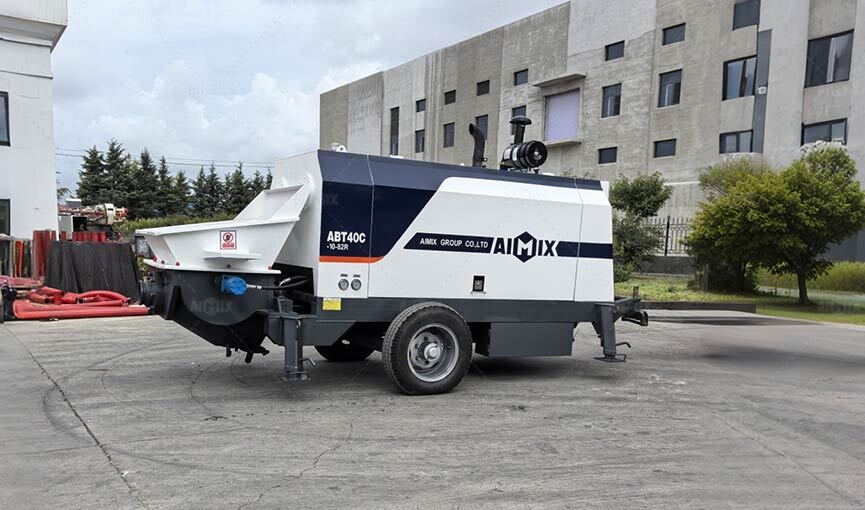
Traditional methods like cranes and buckets or conveyor systems are plagued by inefficiency and limited range when operating on a slope. Their cyclical nature interrupts the continuous pour essential for structural integrity in retaining walls and foundational elements. The static concrete pump, by contrast, is engineered for a singular purpose: to deliver a consistent, uninterrupted flow of concrete over vast distances and dramatic elevations. Stationed at a stable base location, it acts as the heart of the operation, pumping material through a network of pipelines that can be meticulously routed up the face of a slope, across treacherous terrain, or deep into a project site. This capability transforms the economics and feasibility of hillside construction, turning a herculean task into a managed, continuous process. The pump's ability to maintain a <strong>hydraulic continuum</strong> is its foundational principle, ensuring the concrete does not segregate or set prematurely during its arduous journey.
The Technical Arsenal: How Static Pumps Conquer Complex Terrain
The efficacy of the static pump in these demanding applications is a direct result of its sophisticated technical arsenal. At its core lies a high-pressure hydraulic system, significantly more powerful than those found on most mobile concrete boom pumps. This system generates the immense force required to push the concrete mix through hundreds of meters of pipeline against the relentless pull of gravity. The engineering, however, extends beyond raw power. The configuration of the pipeline itself is a science, involving careful calculations to minimize friction and pressure loss through the use of specialized bends and wear-resistant liners. On models equipped with placing booms, the articulation of the boom allows for precise placement at the discharge point, enabling workers to fill complex formwork for retaining structures or create shotcrete layers for slope stabilization from a safe, remote position. Furthermore, the success of this operation is a symbiotic relationship between the machine and advanced material science. Concrete mixes for these applications are specifically designed with pumpability in mind, often incorporating admixtures that enhance cohesion and reduce internal friction without compromising final strength.
Real-World Applications: Reshaping the Built Environment
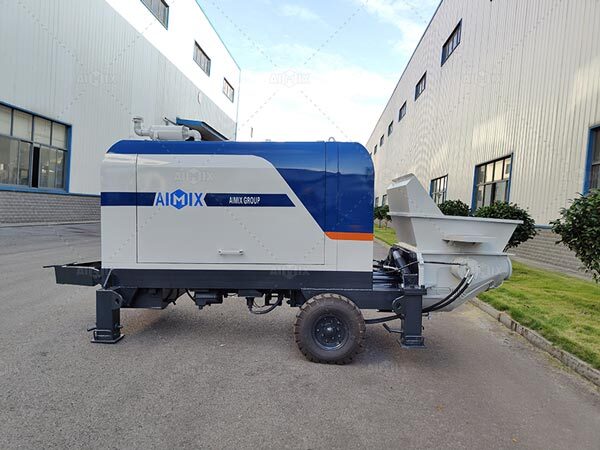
The practical applications of static pumps in slope management and development are both diverse and transformative. One of the most critical uses is in slope stabilization and erosion control. These pumps are instrumental in constructing massive retaining walls, soil-nailing projects, and applying thick layers of shotcrete to reinforce unstable embankments along highways and railway corridors. By providing a reliable means of placing concrete in these challenging locations, they directly contribute to public safety and infrastructure resilience. In the realm of urban development, static line pumps for sale are the unsung heroes behind the creation of terraced housing complexes and luxury hillside residences. They enable the pouring of foundations and structural elements on steep grades, opening up valuable land for habitation that would otherwise be deemed unbuildable. Looking forward, the precision and programmability of modern static pumps position them as key enablers for emerging technologies, particularly in the realm of robotic construction and large-scale 3D printing of earth-retaining structures, where their controlled, continuous output is not just beneficial, but essential.