Imagine the quintessential high-rise construction site, a buzzing hive of activity shoehorned into a tight urban plot. Or picture a complex infrastructure project winding through a congested corridor, where every square meter of ground is a contested resource. The traditional concrete batching plant, with its sprawling aggregate bins and vast material stockpiles, seems like an impossible dream in these scenarios. Yet, the demand for high-quality, consistent concrete remains non-negotiable. This spatial paradox finds its brilliant resolution in a uniquely efficient design: the hopper feeding small concrete batching plant. This isn't just another piece of equipment; it's a masterclass in volumetric intelligence, a system engineered to deliver formidable production power from a remarkably modest footprint.
The Vertical Advantage: Reimagining the Material Flow
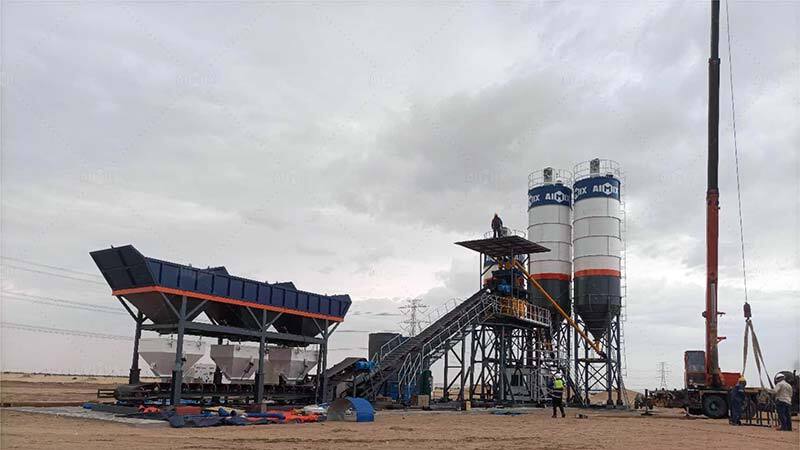
The genius of the hopper feeding plant lies in a fundamental reorientation—from horizontal sprawl to vertical integration. Instead of requiring large, ground-level compartments for each aggregate size, these plants utilize a series of tall, vertically stacked hoppers. This design constitutes a profound spatial economization. Bulk materials are delivered and elevated directly into these overhead hoppers, which then gravity-feed the precise amounts needed into the mixer below. This elegant vertical flow accomplishes two critical feats. First, it consolidates the entire storage and measuring process into a single, compact tower-like structure. Second, it completely liberates the precious ground space that would otherwise be monopolized by stockpiles and the wide arcs of front-end loaders. The freed-up area becomes a strategic asset, available for formwork staging, rebar fabrication, or simply safer and more efficient site circulation. It’s a triumph of thinking upward, not outward.
The Logistics Harmonization: Streamlining On-Site Movement
Beyond mere space-saving, the hopper system orchestrates a sublime harmonization of on-site logistics. Consider the chaotic ballet of a traditional setup: bulk trucks dump, loaders scramble to move piles, and dust flies. The hopper plant replaces this with a streamlined, almost rhythmic, cadence. Bulk delivery vehicles can discharge their loads directly into the hoppers via conveyor or elevator, a process that is faster, cleaner, and contained. This creates a just-in-time staging system right above the mixer. There’s no secondary handling, no need for a dedicated loader and operator to constantly charge the mini concrete plant, and a dramatic reduction in material degradation and spillage. The result is a significant diminution of site congestion, vehicle movement, and associated inefficiencies. The plant becomes a predictable, quiet hub of production rather than a disruptive source of constant activity, allowing the rest of the project to flow smoothly around it.
The Scalability Blueprint: Flexible Power for Phased Projects
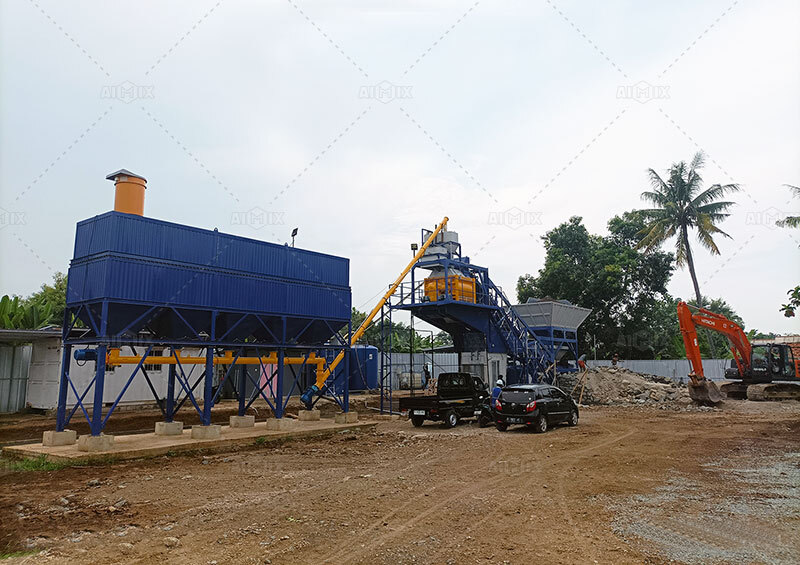
Perhaps the most underappreciated analytical point is the inherent scalability these plants provide. Their design is often modular, meaning additional hopper capacity or a larger mixer can be integrated as project demands escalate. This allows a contractor to right-size the initial investment and scale up seamlessly, avoiding the prohibitive cost and space requirements of an oversized plant from day one. Furthermore, this modularity translates to exceptional site adaptability. When a project progresses from the foundation phase to superstructure, the entire portable concrete batch plant can be disassembled, relocated, and recommissioned in a new optimal location with relative ease compared to a fixed, ground-based system. This mobility ensures that the point of production is always strategically close to the point of placement, minimizing the travel time and cost of concrete transit vehicles. It provides a continuous thread of efficient, localized production throughout the project’s entire lifespan, from the first pour to the last.
In essence, the hopper feeding concrete batching plant is a definitive answer to one of modern construction's most pressing constraints. It demonstrates that maximum output does not necessitate a maximum footprint. By leveraging verticality, synchronizing logistics, and embracing modular flexibility, this technology transforms spatial limitation from a paralyzing obstacle into a manageable parameter. For the analytical mind focused on optimizing every facet of a project, it represents a compelling convergence of engineering ingenuity and practical, on-the-ground wisdom, proving that sometimes, the most powerful solution is also the most spatially elegant one.